
What to Do When Depressed and Daily Tasks Feel Impossible

The phone keeps buzzing. Answering it feels like too much. Dishes have sat in the sink for two days, not from carelessness, but because deciding where even to start takes more energy than you have. Hunger shows up, and cooking still feels like a project you can’t take on today. Sound familiar? Depression can turn […]
Why Severe Anxiety Symptoms Can Make Everyday Decisions Feel Harder

You sit down to answer a two-line text, and 20 minutes later, you’re still staring at the cursor. Or you’re standing in the cereal aisle, frozen, because, somehow, picking the wrong brand feels like it matters way more than it should. Sound familiar? You’re not imagining it, and you’re not bad at making decisions. The […]
Why Some Patients Struggle to Disconnect from Work-Related Stress

You shut the laptop, but your brain keeps the office open. The drive home, the dinner table, the moment your head finally hits the pillow, and the workday is still running quietly in the background. If that sounds familiar, you are not weak or bad at “switching off.” Struggling to disconnect is rarely a willpower […]
How Therapy Helps Patients Manage Feelings of Disappointment in a Healthier Way

Everyone knows what disappointment feels like. The job that went to someone else, the relationship that fizzled, the plan you built up in your head that never quite arrived. It stings, and then most of the time it fades. You adjust, you move on, and life keeps going. But disappointment does not always pass so […]
Why Anxiety Symptoms Can Make Decision-Making Feel Overwhelming

There are days when the simplest choices seem to be the hardest. You stare at an unsent email, rewrite it twice, then wonder whether to send it at all. You put off booking an appointment. You say yes to a task you meant to decline, then replay the moment for hours afterward. None of these […]
What Patients Should Know About the Connection Between Chronic Stress and Physical Health

Patients tend to sort their symptoms into two piles: the ones that feel medical and the ones that feel emotional. A racing heart goes in one pile. A bad mood goes away in the other. However, the body doesn’t organize itself that way. Someone might book an appointment for chronic headaches, poor sleep, or exhaustion […]
What Patients Often Misunderstand About Setting Healthy Emotional Boundaries

Most people don’t decide to drop a boundary. It happens in small moments: saying yes when you mean no, staying quiet when something feels unfair, picking up one more task because refusing feels harder than doing it. None of those moments looks significant alone. Strung together across a marriage, a job, or a friendship, they […]
How Therapy Helps Patients Navigate Difficult Conversations With Greater Confidence

You know exactly what you need to say. Maybe it’s telling a partner you need more space, asking your boss for a deadline extension, or finally addressing months of tension with a sibling. And yet the conversation keeps slipping to “later.” That gap, knowing the words but not feeling able to say them, is where […]
How Therapy Helps Patients Navigate Feelings of Guilt that Contribute to Emotional Distress

Guilt is not always a problem. It does a job. When you hurt someone or step outside your own values, guilt flags it, and sometimes that flag is the very thing that pushes you to make things right. The trouble starts when it overstays. Long after the lesson has landed, guilt can keep running quietly […]
How Clinicians Help Patients Identify When Stress Has Become a Chronic Issue
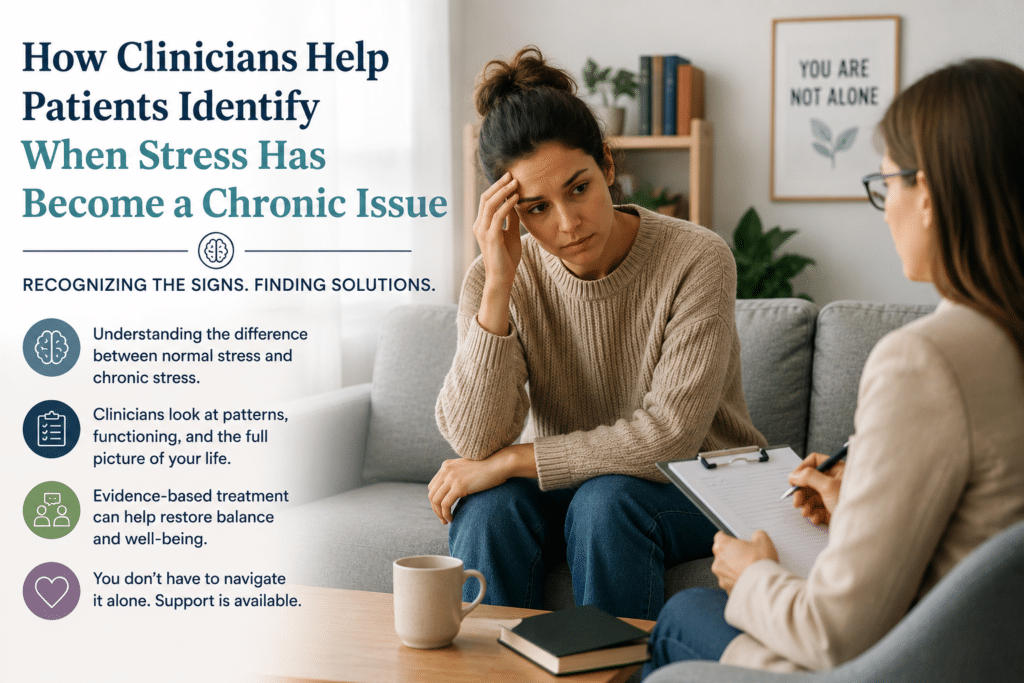
Stress shows up when life asks more of you than usual, and most of the time it fades once the deadline passes or the crisis settles. The trouble starts when it does not fade. A pressure that felt temporary digs in, outlasts the thing that caused it, and quietly reshapes how you sleep, focus, and […]