
Why Some Patients Wait Longer Than They Realize to Seek Mental Health Support
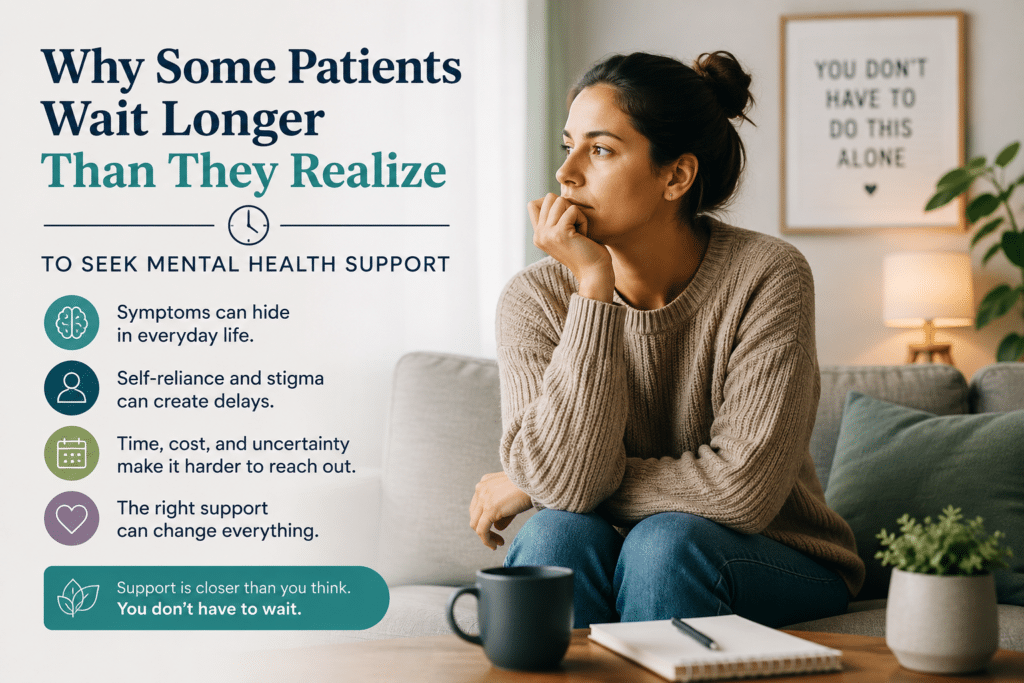
Most people do not wake up one morning and decide to put off mental health care. The change usually arrives slowly: Energy dips, sleep gets worse, patience runs thin, and motivation fades, and each shift feels small enough to explain away. Because the signs are so easy to misread, the gap between when symptoms start […]
How Clinicians Help Patients Rebuild Confidence After Periods of Chronic Anxiety

Chronic anxiety does more than cause worry. Over time, it changes how a person moves through the world. Small decisions start to feel high-stakes. Situations that once felt routine now come loaded with “what ifs.” And somewhere in that process, self-trust takes a hit. For people who have been living with this for months or […]
Why Some Patients Have Difficulty Recognizing Progress in Their Own Mental Health Journey

It’s more common than most people realize: Someone finishes a month of treatment and says, “I don’t think it’s working.” But when a clinician pulls up their intake scores, the numbers tell a different story. Progress happened, but the patient just couldn’t see it. That gap between actual improvement and perceived improvement isn’t a character […]
How Therapy Helps Patients Navigate Uncertainty When There Is No Clear Solution to a Problem

Not every problem has a solution, at least not right now. A diagnosis with no clear prognosis, a job situation that keeps shifting, or a relationship that may or may not recover are some of the uncertainties that sit with a person day after day, resisting every attempt at resolution. Therapy doesn’t promise to fix […]
How Clinicians Help Patients Recognize When Perfectionism Is Contributing to Emotional Distress

Most of us were taught that high standards are a good thing. Working hard, catching mistakes, and caring about quality usually earn praise. But for some people, the drive to get everything right stops feeling motivating and starts feeling like a weight that never lifts. It shows up as chronic worry, harsh self-judgment, and a […]
Why High-Achieving Adults Sometimes Overlook Signs of Anxiety and Depression

Some of the most accomplished people you know are also some of the most quietly exhausted. They run teams, hit targets, raise kids, and answer emails at midnight, all while carrying a weight they rarely name out loud. From the outside, everything looks handled. That outside view is exactly the problem. When you are used […]
How Online Therapy Supports Patients Managing Major Life Transitions

Big life changes don’t happen quietly. A new job, a cross-country move, a divorce, a first baby, or stepping into a caregiving role can shake up routines that once held everything together. These moments carry real emotional weight, and they tend to land right when daily structure feels least reliable. That timing is the hard […]
How Therapy Helps Patients Recognize Emotional Burnout Before It Becomes More Disruptive

Emotional burnout rarely arrives all at once. For most people, it builds quietly over weeks or months, showing up first as low energy, a shorter fuse, or small tasks requiring more effort than they should. By the time someone says, “I think I’m burning out,” the signs have often been there for a while. Most […]
Why Some Patients Struggle More Emotionally During Quiet or Unstructured Periods of the Day

A lot of people describe a version of the same experience. Work is fine, errands get done, and social plans go okay. But once the day quiets down, something shifts. Evenings feel heavy, and weekends feel harder than they should. Quiet time is not the problem. What those slower hours do is remove the noise […]
What Patients Often Misunderstand About Emotional Avoidance and Anxiety Symptoms

A lot of people believe that stepping back from stressful situations, uncomfortable feelings, or difficult conversations is a smart way to protect their mental health. In the moment, it can genuinely feel that way. Sometimes the tension drops, and things feel more manageable. Still, there’s a gap between what avoidance feels like short-term and what […]