
Starting psychiatric treatment takes a kind of courage that feels quiet on the outside and loud on the inside. A lot of people walk into the first appointment with the same anxious thought running in the background: “Is this working?” That question makes sense, but early progress rarely looks like a clean before-and-after moment.
Most clinicians expect the first stretch to feel subtle and a little nonlinear. You might feel better for three days and then feel flat again, or you might notice one small shift while everything else still feels heavy.
This guide walks through the first 30–90 days in phases, so you can see what clinicians monitor, what counts as meaningful progress, and why the early steps of depression and anxiety treatment often involve adjustment instead of instant resolution.
Quick Answer
Progress in the first 30–90 days of psychiatric treatment is usually gradual and measured across multiple dimensions, including symptom reduction, side effect tolerability, and daily functioning. Research shows that meaningful antidepressant response often takes about six weeks on average, with remission taking longer for many patients. Clinicians use structured follow-ups, symptom scales, and patient-reported functioning to guide medication adjustments and therapy integration. Early treatment phases focus on safety and tolerability, middle phases on momentum and functional gains, and later phases on sustained improvement and maintenance planning.
Days 1–30: Safety, Response, and Adjustment
The first month usually aims for stability. Clinicians want to reduce risk, start movement in symptoms, and learn how your body responds to the plan.
Initial Symptom Response
Clinicians often look for a change in the sharpest edges first. That might mean fewer spikes of panic, less intense spiraling, or a slightly lighter mood that shows up for an hour instead of not at all.
The STARD study (Sequenced Treatment Alternatives to Relieve Depression) helps explain why clinicians stay cautious in this window. STARD enrolled 4,041 patients across 41 U.S. clinical sites, and 2,876 participants counted as “evaluable” for Level 1 outcomes. STAR*D reported an average of about 6 weeks to response, and almost 7 weeks to remission, so clinicians often treat days 1–30 as the beginning of a trend.
Side Effect Monitoring & Management
Clinicians also treat side effects as real data, because tolerability decides whether a medication trial can even continue long enough to work. The FDA label data for escitalopram (Lexapro) in generalized anxiety disorder trials make this concrete.
In those GAD trials, 8% of people on escitalopram discontinued due to adverse events, compared with 3% on placebo. Nausea occurred in 18% on escitalopram versus 8% on placebo, and insomnia occurred in 12% versus 6%.
Those numbers explain why a clinician may adjust dose timing, slow down increases, or respond quickly to certain problems. That approach supports the plan rather than interrupting it.
Therapeutic Alliance
Trust matters early because it improves reporting. STAR*D used a practical outpatient structure with regular follow-ups, including visits every two weeks during the first six weeks and then every three weeks, totaling about five to six visits during the acute phase. That cadence gives room for honest feedback when something feels off or confusing.
Patient Focus
In this phase, most patients do best when they stick with the plan and report what they notice without filtering it. One clear sentence about sleep or nausea can help a clinician more than a vague “I feel weird.”
Days 31–60: Building Momentum and Function
The second month usually shifts from “starting the plan” to “making the plan fit.” Clinicians often press for stronger symptom relief while watching for day-to-day function returning.
Symptom Consolidation
This is often where change becomes steadier if the approach matches the person. STAR*D reported an average of about six weeks to response, which lands right inside this period. That does not mean everyone improves at exactly that point, but it explains why clinicians often reassess the plan around week six instead of week one.
Functional Glimmers
Function often improves in small, almost mundane ways. You might get out of bed with less negotiation. You might answer a text instead of avoiding your phone all day. You might focus long enough to complete one work task, then feel tired but not wrecked.
Clinicians treat these as meaningful because they show your nervous system and routines starting to loosen up. Function can move even when the mood still feels low.
Iterative Refinement
Adjustment usually signals active care, not failure. STARD reported that about one-third of participants reached remission at Level 1, which means many did not. STARD also reported that about 9% discontinued the first medication due to side effects, so clinicians often expect the first plan to require tweaks.
Patient Focus
Patients help this phase when they notice small wins and report them in detail. A clinician can work with “I fall asleep in 30 minutes now,” more than “I sleep better.”
Days 61–90: Measuring Sustainable Change
By the third month, clinicians usually ask whether improvements hold across real life. They also start planning what maintenance should look like, because the acute phase does not last forever.
Sustained & Significant Reduction
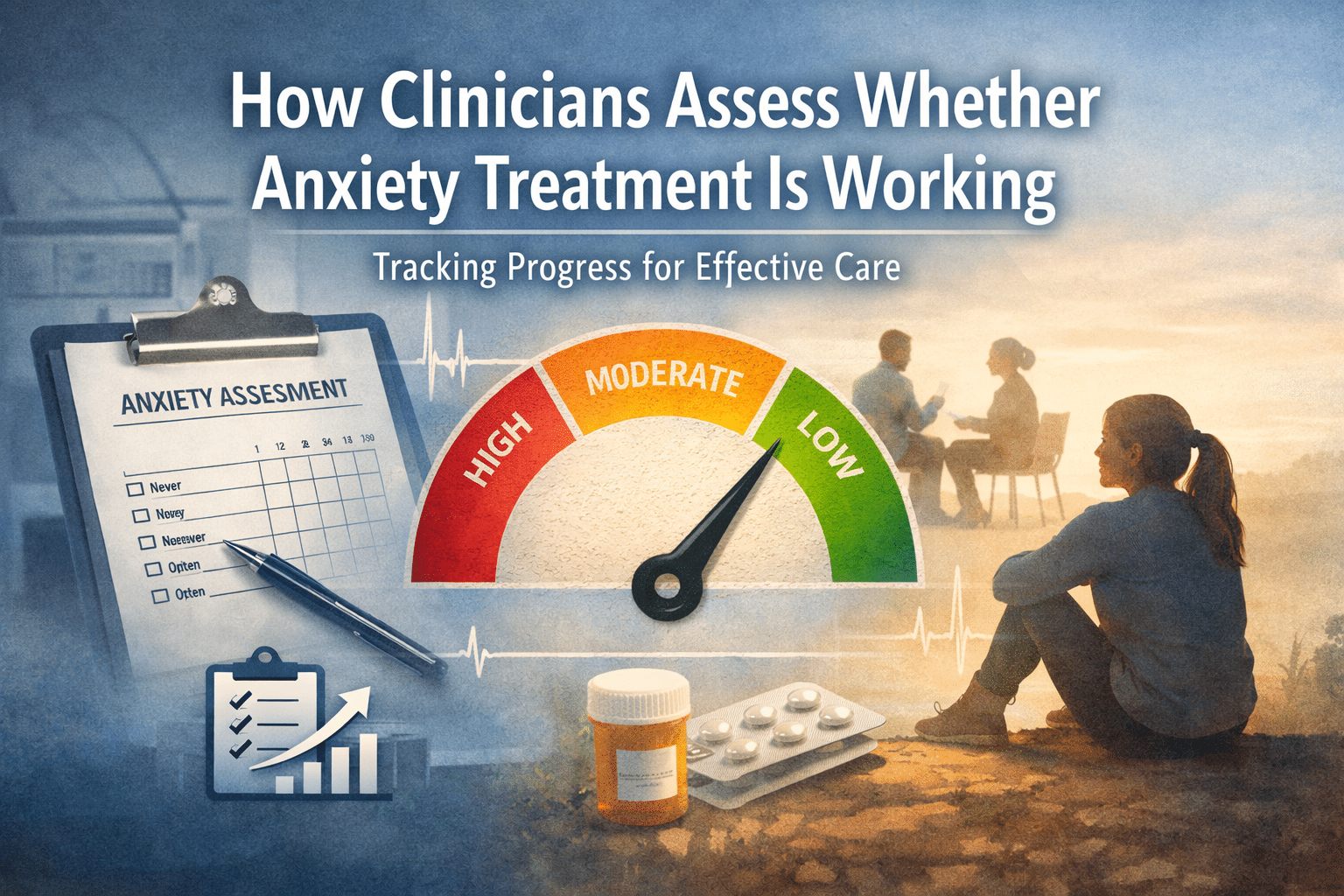
Clinicians often track progress with rating scales because the numbers show change over time, not just a good day. Many people describe a “50% improvement” idea in everyday language, and clinicians often translate that into score movement across visits.
The CMS electronic clinical quality measure for depression remission uses a PHQ-9 score below 5 as a remission threshold, which shows how U.S. healthcare systems define “symptoms are largely resolved” in measurable terms.
Quality of Life Metrics
Clinicians usually look at return to life. You might rejoin activities, show up more consistently in relationships, or do better at work or school. This often matters more than a single symptom score.
Internal Shifts
People often notice quieter changes here. They bounce back faster after a bad day. They use coping skills without forcing it. They feel a little more agency returning.
Patient Focus
This phase works best when patients look back and compare to baseline. The contrast often shows more progress than the day-to-day feeling does.
The Indicators Beyond the Symptoms: How Progress Is Truly Measured
Clinicians measure success in more than one lane. They track symptoms, but they also track sleep patterns, appetite, therapy engagement, and how consistently you show up in your own routines.
They also rely heavily on your report. If you tell a clinician you function better, that report carries clinical weight, especially when it matches the pattern over several visits.
From Foundation to Future: Recognizing Your Growth
Early progress usually builds in layers. The first month stabilizes and tests tolerability. The second month pushes the plan toward a better fit and better function. The third month checks whether changes hold and whether life starts coming back online.
At Zeam, we support patients in Sacramento, Roseville, and Folsom through psychiatric treatment by treating those early weeks as a guided process, not a waiting game. We track symptoms, side effects, and daily function so we can adjust care with purpose. If you want support with depression treatment, contact us to start a plan that stays responsive to what you experience.
Key Takeaways
- Psychiatric treatment progress in the first 30–90 days is usually nonlinear, with early subtle improvements rather than dramatic shifts.
- Large real-world depression research shows average response around six weeks and remission closer to seven weeks for many patients.¹
- Early treatment phases focus on safety, tolerability, and side effect management, which strongly influence whether a medication trial can continue.²
- Medication discontinuation due to side effects is common enough that dose timing and titration adjustments are standard clinical practice.²
- Clinicians reassess treatment plans around weeks 4–8, since many patients require refinements rather than immediate remission.¹
- U.S. measurement frameworks often define depression remission as a PHQ-9 score below 5, supporting structured symptom tracking.
- Functional gains — like improved sleep, task completion, and social engagement — are considered clinically meaningful progress, even before full symptom remission.
Citations
- STAR*D Level 1 Results — National Institute of Mental Health (NIMH):
https://www.nimh.nih.gov/funding/clinical-research/practical/stard/studylevel1results - Escitalopram (Lexapro) Prescribing Information — U.S. Food and Drug Administration (FDA):
https://www.accessdata.fda.gov/drugsatfda_docs/label/2023/021323s055,021365s039lbl.pdf