
What Patients Notice in the Early Stages of TMS Therapy
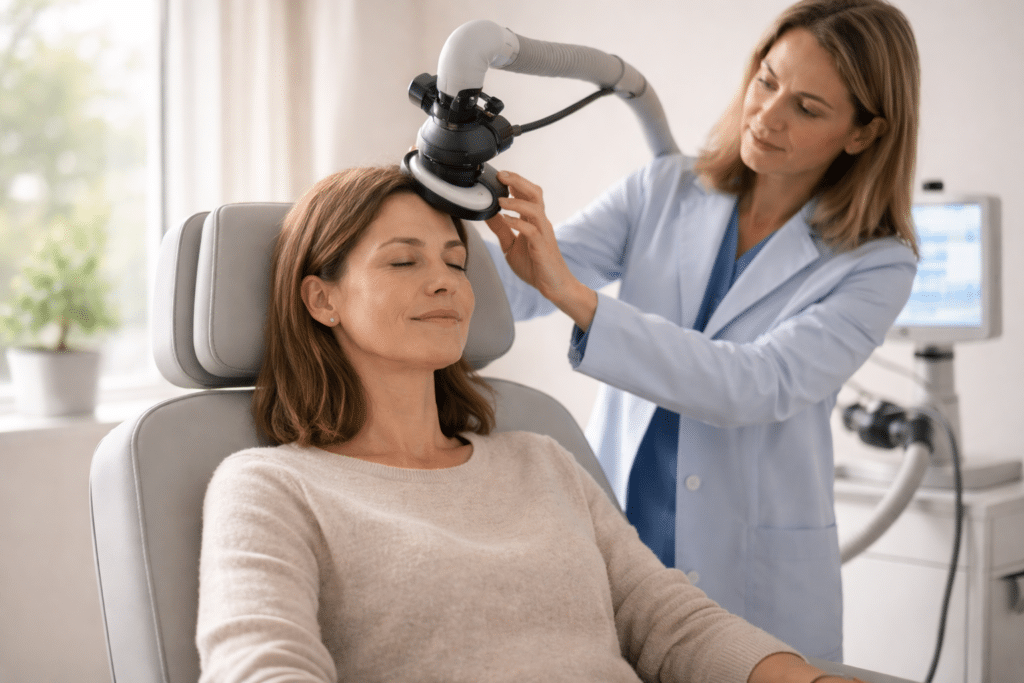
Starting TMS brings up a lot of questions. You might wonder if you’ll feel something right away. Or maybe you’re bracing yourself to feel nothing at all, because that’s just how these things seem to go sometimes. That mix of hope and hesitation is standard for anyone stepping into a new kind of psychiatric treatment. […]
How Outpatient Mental Health Treatment Helps You Avoid Hospitalization

A lot of people dealing with depression or anxiety try to “push through” their symptoms for months. The slide is usually slow enough that it almost feels normal. National data makes that pattern clearer: More than 59 million U.S. adults experience mental health symptoms each year, yet only about half receive any treatment at all. […]
How Depression Shows Up Differently in Men vs. Women

People talk about depression as if it looks the same on everyone, but anyone who has watched a friend or partner struggle knows that is not true. Symptoms don’t fall into one neat box. In the U.S., roughly 21 million adults experience major depression each year, yet women are diagnosed almost twice as often as […]
The End-of-Year Mental Health Check-In Everyone Should Be Doing

The end of the year has a strange way of sneaking up on people. One moment you’re juggling deadlines and holiday plans, and the next you’re wondering how another twelve months passed in a blur. That’s usually when emotions you’ve been carrying, such as stress, sadness, worry, or just plain exhaustion, start showing more clearly. […]
What Is High-Functioning Depression? Recognizing the Hidden Signs

High-functioning depression has become a familiar phrase, even though it is not an official diagnosis. More people are realizing they can keep up with work, relationships, and responsibilities while still feeling drained, disconnected, or quietly overwhelmed. This blog explains what that experience looks like, why it often gets brushed aside, and how personalized care, from […]
What Is Psychodynamic Therapy A Beginner-Friendly Guide

Most people come to therapy because something in life feels heavier than it should. Maybe relationships feel confusing. Maybe old patterns keep repeating. Or maybe you’re noticing emotions that seem bigger than the situation in front of you. Psychodynamic therapy is a gentle, reflective form of treatment that helps people understand why these patterns exist—and […]
Signs Your Hormones May Be Out of Balance (and What to Do Next)

You’re doing all the right things: eating well, getting decent sleep, showing up for work, family, or both, and still, something feels off. You wake up tired, you snap at people over small things, and your focus slips. It’s like you’ve misplaced your spark, and you don’t know where to look for it. Many people […]
Testosterone and Energy: What Men Over 40 Need to Know About Testosterone Replacement Therapy (TRT)

At some point, the usual routine starts to feel a bit heavier. You’re still showing up, pushing through the motions. However, the energy you once had, the part that made you feel sharp, strong, and motivated, starts slipping out of reach. This doesn’t happen overnight. For a lot of men in their 40s or 50s, […]
5 Surprising Benefits of Hormone Replacement Therapy for Women Over 40

Most women expect hot flashes, night sweats, and irregular cycles as they approach their forties. What many do not expect are the slower, quieter changes: waking up tired despite eight hours of sleep, forgetting familiar words mid-sentence, or suddenly feeling like a stranger in their own skin. These are just as real as the classic […]
The Real Reason You Are Tired All the Time (Hint: It Is Not Just Stress)

You wake up tired. You move through the day like your energy got left behind. People tell you it is probably stress, or age, or just modern life. So, you try to eat better, sleep more, and maybe even meditate, but nothing sticks. The fatigue always comes back. What if the real issue runs deeper […]