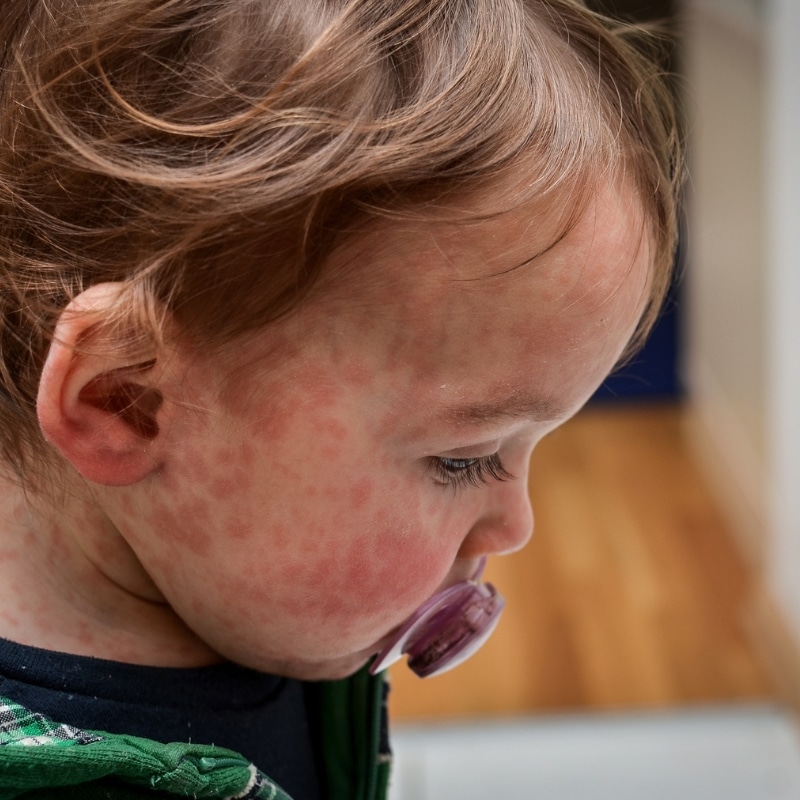
It’s 2025, and we are hearing about measles, which was once thought to be a disease of the past. For years, doctors and public health officials believed that widespread vaccination had eliminated the virus from the United States. However, recent outbreaks have shown that this highly contagious disease is making a comeback.
The Centers for Disease Control and Prevention (CDC) has reported 301 confirmed measles cases across 15 states so far in 2025. The most worrying thing is that many of these cases have been linked to low vaccination rates and misinformation.
Doctors who have never seen a measles case in their careers are now diagnosing children and adults with the disease. Parents who chose not to vaccinate their children are now seeing firsthand the risks of measles.
Unfortunately, public health officials say that false information about vaccines continues to spread, making it harder to contain the outbreaks. According to Dr. Dial Hewlett Jr., a medical director in New York, “The measles outbreak that we are currently witnessing is the result of misinformation.”
Measles spreads easily. Once it enters a community with low vaccination rates, it can spread quickly. The return of this disease has become a public health crisis. As a result, doctors are urging parents to get their children vaccinated before the outbreaks get worse.
Quick Answer Summary
Measles cases are rising again in the United States due to declining vaccination rates and widespread vaccine misinformation. Public health officials warn that low MMR vaccination coverage, combined with online misinformation and reduced public health resources, is making outbreaks harder to control and increasing the risk of serious illness, hospitalization, and death.
Key Takeaways
- The CDC reported more than 300 confirmed measles cases across 15 states in 2025, with most cases occurring in unvaccinated individuals.¹
- Declining childhood vaccination rates have left hundreds of thousands of children vulnerable to measles outbreaks.¹˒³
- Measles is highly contagious and can remain airborne for up to two hours after an infected person leaves an area.⁴
- Vaccine misinformation, including false claims linking the MMR vaccine to autism, continues to fuel vaccine hesitancy despite extensive scientific evidence disproving those claims.²˒⁴
- Measles can lead to serious complications such as pneumonia, brain swelling, hospitalization, and death, particularly in children and vulnerable populations.¹˒³
- Public health officials warn that workforce reductions and funding cuts are making it more difficult to respond effectively to outbreaks.²
- Vitamin A may help reduce complications in malnourished children with measles, but it does not prevent or cure the disease.⁵
- Health experts continue to emphasize that vaccination remains the safest and most effective way to prevent measles outbreaks.¹˒³
Why Are Measles Cases Increasing?
The rise in measles cases is not random. It is happening because more people are choosing not to vaccinate. The CDC reports that in 2025, 95% of measles cases were in people who were not vaccinated or had unknown vaccination status.
Vaccination rates have dropped in many parts of the country. According to the CDC, only 92.7 percent of kindergarteners were vaccinated against measles in the 2023–2024 school year. This was down from 95.2 percent just a few years earlier. This drop might not seem like a big deal, but it has left 280,000 children vulnerable to measles.
Measles spreads through the air. It can linger in a room for up to two hours after an infected person has left. If vaccination rates continue to drop, outbreaks will likely become more common.
How Has Misinformation Fueled the Problem?
Misinformation about vaccines is one of the biggest reasons people are not vaccinating their children. A now-discredited 1998 study falsely claimed that the MMR (measles, mumps, and rubella) vaccine caused autism. Even though the study was later retracted and debunked, many parents still believe it.
Social media has made the problem worse. False claims about vaccines spread quickly online, often making it difficult for people to know what to believe. Some people say vaccines contain harmful chemicals, while others claim that natural immunity is better than vaccination. These statements are misleading and ignore the fact that decades of research show that vaccines are safe and effective.
The Serious Health Risks of Measles
Some people believe that measles is just a mild childhood illness. That is not true. Measles can lead to serious complications, such as pneumonia, brain swelling, and even death.
In 2025, 17 percent of measles patients have been hospitalized due to complications. In Texas, one unvaccinated child has already died from measles. In addition, New Mexico is investigating a second possible measles-related death.
The measles vaccine is 97 percent effective with two doses. That means that nearly everyone who gets both doses is protected. Without vaccination, measles spreads rapidly, and those infected are at a much higher risk of serious illness.
The Impact of Funding Cuts on Public Health
Public health officials are facing another challenge in fighting measles: lack of funding. The CDC recently cut 10 percent of its workforce. This move makes it even harder for local health departments to track and contain outbreaks because of reduced resources.
Some doctors and nurses are struggling to respond to the outbreak because they have never seen a measles case before. Since measles was eliminated in 2000, many healthcare workers never had to diagnose or treat it. Now, they are rushing to learn as cases spread.
At the same time, the federal government has cut funding for vaccine research. Public health experts warn that these funding cuts will make future outbreaks harder to control.
False Cures and Alternative Treatments
In addition to misinformation about vaccines, some people are also spreading false cures. Some claim that vitamin A can prevent or cure measles. According to the World Health Organization, vitamin A can indeed help reduce complications in malnourished children. However, it does not prevent measles.
Public health officials stress that vaccination is the only effective way to prevent measles. Anyone who relies on alternative treatments instead of vaccines is putting their children at risk.
What Can Be Done to Stop the Outbreaks?
Measles outbreaks can be prevented through action at multiple levels. This includes:
- Parents should vaccinate their children: The MMR vaccine is safe and has been used for decades. It provides lifelong protection against measles.
- Doctors and nurses should educate patients about vaccines: Many people avoid vaccines because they are unsure if they are safe. Medical professionals should provide clear, science-based information.
- Social media platforms should combat misinformation: False claims about vaccines spread rapidly online. Platforms must take responsibility for stopping the spread of dangerous misinformation.
- Local health departments need better funding: Public health workers are on the front lines of disease prevention. When their funding is cut, it only makes outbreaks worse.
Keeping Our Community Healthy Starts With Prevention
The return of measles is a preventable crisis. The disease had been eliminated for years, but low vaccination rates and misinformation have allowed it to spread again. The CDC and public health officials are working hard to stop the outbreaks, but they cannot do it alone.
At Zeam Health & Wellness, we believe in the power of preventative care. Our primary care team in Folsom and Roseville is dedicated to keeping families safe by offering comprehensive vaccination services.
Schedule an appointment today to make sure your family is protected from measles and other preventable diseases. Together, we can work toward a healthier future.
Citations
- CDC. Measles Data and Research. https://www.cdc.gov/measles/data-research/index.html
- Fierce Healthcare. Public health officials say CDC cuts, misinformation hinder measles response. https://www.fiercehealthcare.com/providers/public-health-officials-say-cdc-cuts-misinformation-top-down-hinders-measles-response
- CDC MMWR. Measles Cases and Vaccination Trends. https://www.cdc.gov/mmwr/volumes/73/wr/mm7341a3.htm
- The Lancet: Measles, Vaccination, and Public Health Misinformation. https://pmc.ncbi.nlm.nih.gov/articles/PMC3136032/
- World Health Organization. Vitamin A and Management of Severe Acute Malnutrition in Children. https://www.who.int/docs/default-source/nutritionlibrary/publications/malnutrition/guideline-updates-on-the-management-of-severe-acute-malnutrition-in-infants-and-children/updates-management-sam-infantandchildren-review3.pdf?sfvrsn=cc1e4f34_4