
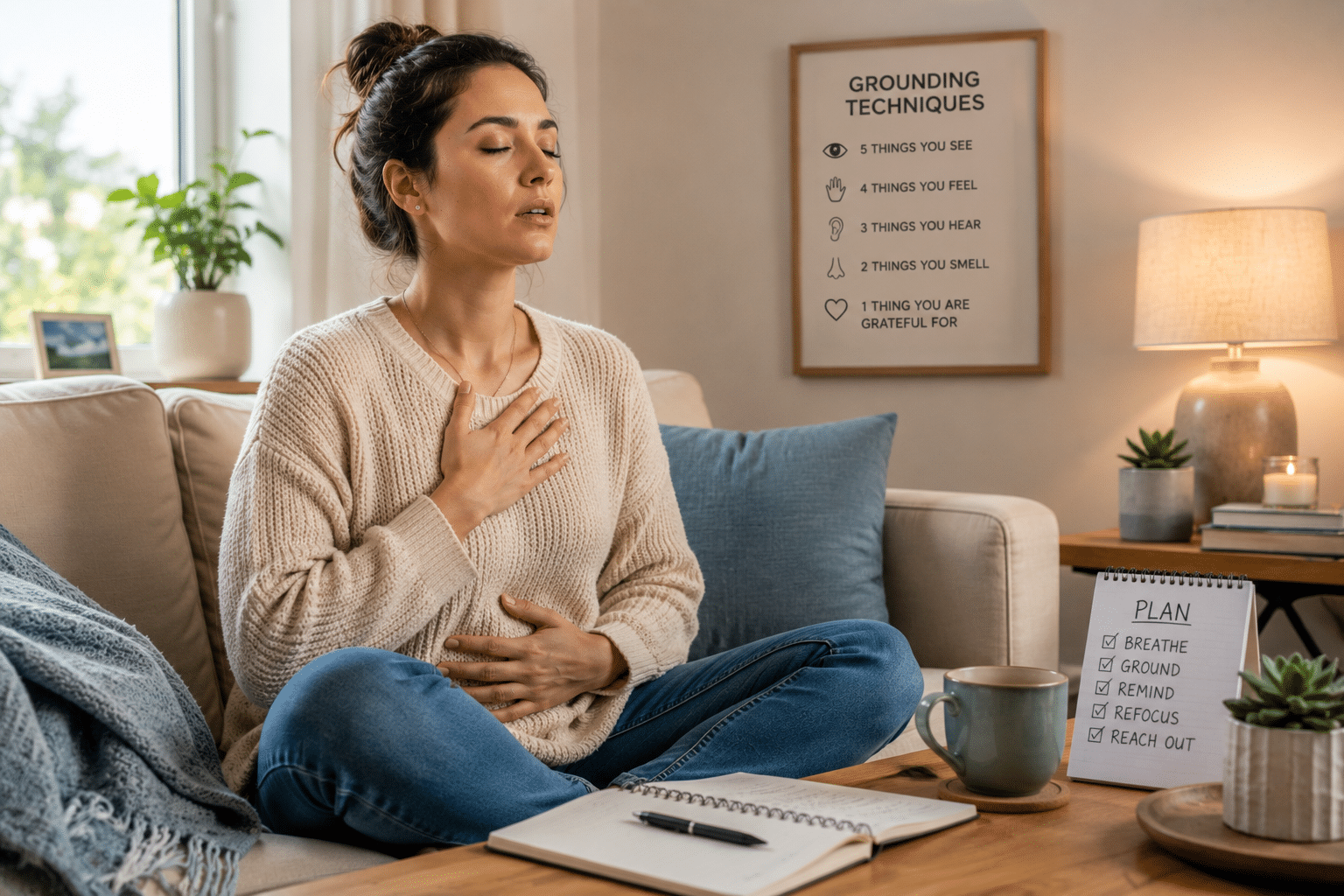
Your pulse spikes, your chest tightens, and for a few unbearable minutes you’re sure something has gone seriously wrong with your body. If you’ve been through an anxiety attack, you know how disorienting it can feel in the moment, and how confusing it can be afterward, trying to figure out what happened.
The good news is that there are concrete things you can do before, during, and after an episode, and there’s a clear point where those coping tools give way to real treatment for anxiety attacks. This guide walks through all three stages.
Quick Answer Summary
Anxiety attacks, often referred to clinically as panic attacks, can cause intense physical and emotional symptoms that feel overwhelming but are treatable. Learning coping strategies before, during, and after an episode can help manage symptoms, while recurring or disruptive attacks should be evaluated by a mental health professional to determine the most appropriate treatment.¹²³
Key Takeaways
- What many people call an “anxiety attack” is often a panic attack—a sudden surge of intense fear accompanied by physical and emotional symptoms.¹²
- Preparing for future episodes by recognizing early warning signs and practicing breathing or grounding techniques can make attacks easier to manage.²³
- During an attack, slow breathing, grounding exercises, moving to a calm environment, and postponing major decisions can help reduce distress once a medical emergency has been ruled out.¹²³
- Keeping a journal of attacks can help identify patterns, triggers, and coping strategies that work best over time.³
- Avoiding places or situations where attacks have occurred may temporarily reduce anxiety but can reinforce fear and limit daily activities.²³
- If anxiety attacks become frequent, unpredictable, or begin interfering with work, relationships, sleep, or daily functioning, professional treatment such as cognitive behavioral therapy (CBT), exposure-based therapy, or medication may help.²³
What Is an Anxiety Attack?
Anxiety attack is a phrase most people reach for instinctively, but it isn’t a diagnosis you’ll find in the DSM-5-TR. It gets used to describe everything from a slow buildup of dread before a big event to a sudden wave of physical fear that seems to come out of nowhere.
Clinically, what people often mean is a panic attack: a sudden surge of intense fear or discomfort, sometimes tied to an obvious trigger and sometimes not, according to Cleveland Clinic.
Many people call the experience an “anxiety attack,” while a provider may describe it as a panic attack or a symptom of another anxiety disorder. One attack also doesn’t mean you have panic disorder. Panic disorder generally involves repeated, unexpected attacks followed by at least a month of worrying about the next one.
What It Can Feel Like
Every episode looks a little different, but there are patterns. On the emotional and cognitive side, people describe a sudden feeling of overwhelming fear, a sense that something terrible is about to happen, trouble concentrating on anything besides the symptoms, or feeling strangely detached from themselves.
Physically, an attack can bring on a racing or pounding heart, chest discomfort, shortness of breath, sweating, trembling, dizziness, nausea, or tingling.
These sensations are real. Your body isn’t malfunctioning so much as overreacting.
NIMH describes panic attacks as a kind of false alarm, where the body’s built-in danger response fires too strongly or at the wrong time, and a racing heart can then get misread as proof that something is genuinely wrong, which only ramps up the fear.
Before Symptoms Escalate: Preparing and Catching Early Signs
This stage has two parts: building a plan ahead of time, and learning to catch the early signs before they build. Many people notice a pattern if they pay attention, whether it’s muscle tension, shallow breathing, racing thoughts, or a rising urge to leave a room. A therapist can help you map your own sequence so you’re not caught off guard every time.
From there, a short, simple coping plan goes a long way:
- Your early warning signs
- Breathing or grounding technique you already know
- A place you can go to settle down
- Someone you trust to call
Practice breathing and grounding while you’re calm, since skills you’ve rehearsed are much easier to use once your thinking gets foggy. The VA National Center for PTSD recommends slowing your breathing and staying present-focused, like keeping your eyes open and noticing where you actually are.
Sleep, regular movement, steady meals, and cutting back on caffeine also support your nervous system between episodes, though none of that replaces real anxiety treatment if attacks keep happening.
During an Attack: What Helps in the Moment
Start by ruling out a medical emergency. Panic symptoms can look a lot like a heart problem, so don’t assume new chest pain or breathing trouble is just anxiety. Sudden chest pressure, pain that spreads toward your arms, back, neck, or jaw, or trouble catching your breath are all reasons to call 911 rather than wait it out. If you can’t tell whether it’s your heart or your nerves, let a medical team make that call instead of guessing.
If you’ve been evaluated before and recognize this pattern, naming it can help create a little distance. This is a wave you’ve felt before, and it will pass. Slow your breathing at a comfortable, steady pace, rather than forcing big gulps of air. Grounding can pull your attention back to the present.
Try looking around and naming what you see, noticing the chair supporting you, or focusing on one simple task. If it’s safe, move somewhere quieter, loosen tight clothing, sit down, and put off any decisions that can wait. If someone’s with you, ask them to stay close, speak slowly, and skip the “just calm down.”
After an Attack: Recovery and Watching for Patterns
Give yourself time to recover. Feeling drained or shaky afterward is common, and easing back into your day beats forcing yourself to snap right back to normal. It can help to jot down a few details while they’re fresh:
- When it happened
- What came before it
- Main anxiety symptoms
- How long it lasted
- What helped
Tracking attacks over time makes it easier to spot triggers and see whether your current approach is actually working.
Keep an eye on avoidance. It’s natural to want to steer clear of wherever an attack happened, but sidestepping driving, stores, or work can quietly shrink your life while reinforcing the fear underneath it.
Additionally, try to meet the whole experience with some compassion. An attack isn’t proof that you’re weak or failing to cope. Progress with this stuff is rarely a straight line.
When to Reach Out to Zeam for Anxiety Treatment
If attacks keep coming back, growing more intense, or starting to shape your daily choices, that’s usually a sign it’s time for more than coping tools. Watch for severe anxiety symptoms that feel hard to control, new physical symptoms you haven’t had checked, or attacks that are interfering with sleep, work, relationships, or driving. A primary care visit can also help rule out contributors like thyroid issues or medication side effects.
From there, real options exist. Cognitive behavioral therapy (CBT) is considered the gold standard for panic disorder, helping people rethink how they interpret anxiety sensations and gradually reduce avoidance. Exposure-based approaches, in-person or through online therapy, and medication, when appropriate, can all play a role depending on your situation.
At Zeam, we know how isolating recurring attacks can feel, and we’re here to help you build a plan that fits your life, whether that starts with individual sessions or our anxiety group therapy. Reach out to Zeam to schedule a consultation and take the next step toward feeling steady again.
Anxiety Attacks FAQs
What should I do during an anxiety attack?
If you’ve already been evaluated by a healthcare provider and recognize the symptoms, focus on slow, steady breathing and grounding techniques, such as noticing your surroundings or identifying objects you can see, hear, or touch. If your symptoms are new, severe, or resemble a medical emergency, seek immediate medical attention.
How can I tell the difference between an anxiety attack and a heart attack?
Panic attacks and heart attacks can share symptoms like chest pain, shortness of breath, dizziness, and a racing heart. Because the symptoms can overlap, you should never assume chest pain is caused by anxiety. If you’re unsure or experiencing new or severe symptoms, call 911 or seek emergency medical care immediately.
Can anxiety attacks be prevented?
While it may not always be possible to prevent every attack, recognizing early warning signs, practicing coping techniques, managing stress, getting adequate sleep, staying physically active, and working with a mental health professional can reduce both the frequency and severity of attacks.
When should I seek professional treatment for anxiety attacks?
It’s a good idea to seek professional help if anxiety attacks are becoming more frequent, causing significant distress, interfering with work, relationships, driving, or sleep, or leading you to avoid situations because you’re afraid of having another attack.
What treatments are available for anxiety attacks?
Treatment depends on the underlying cause but often includes cognitive behavioral therapy (CBT), exposure-based therapy, medication when appropriate, and learning practical coping strategies to better manage anxiety over time.
Citations
- Cleveland Clinic. Are Anxiety Attacks and Panic Attacks the Same Thing?
https://health.clevelandclinic.org/are-anxiety-attacks-and-panic-attacks-the-same-thing - National Institute of Mental Health. Panic Disorder: When Fear Overwhelms.
https://www.nimh.nih.gov/health/publications/panic-disorder-when-fear-overwhelms - U.S. Department of Veterans Affairs. National Center for PTSD. Coping with Stress Reactions.
https://www.ptsd.va.gov/gethelp/coping_stress_reactions.asp