
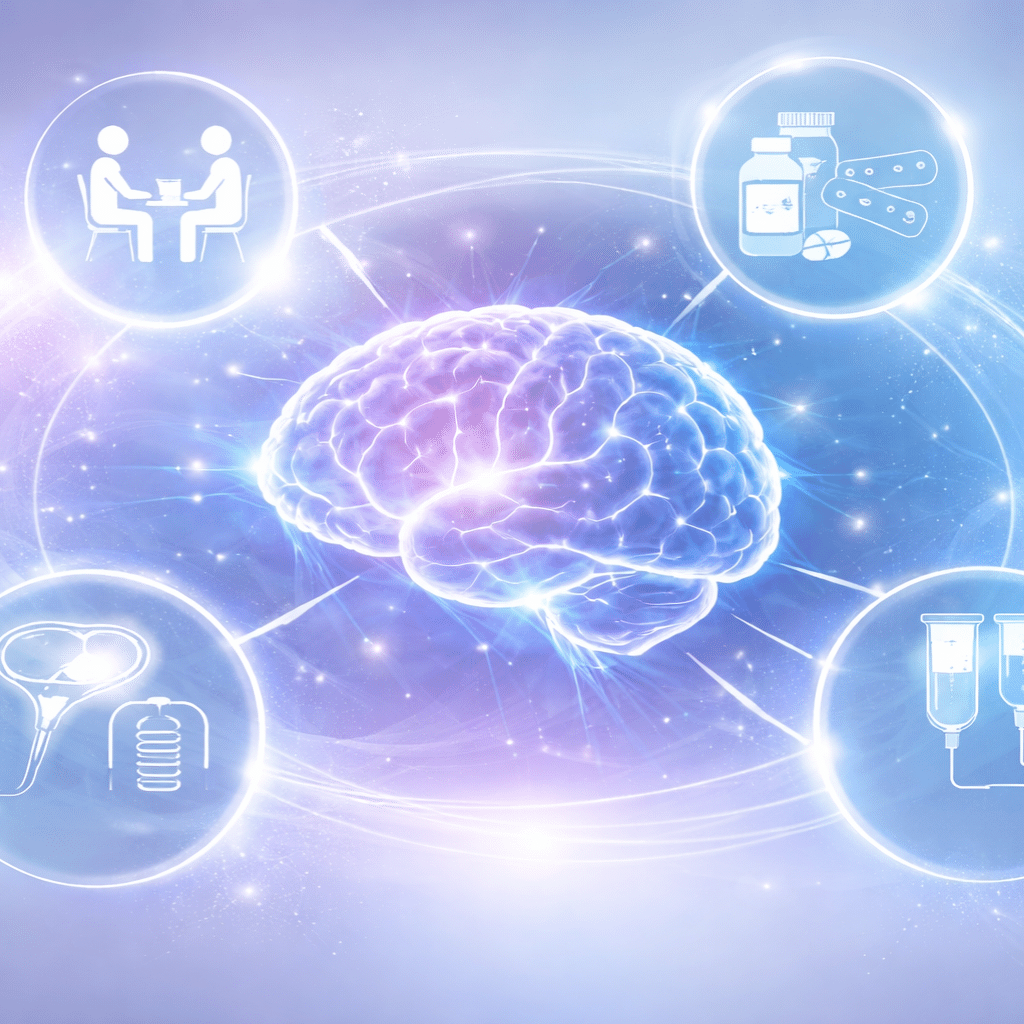
Psychiatric care has changed a lot over the past decade. New research, better diagnostic tools, and a growing understanding of how the brain works have pushed the field in directions that weren’t easy to predict even twenty years ago.
One of the most significant developments, particularly for people who haven’t responded to standard treatments, is the clinical integration of ketamine therapy as a real, recognized option. Not a replacement for what came before it. A specialized addition to a much larger toolkit.
This article explains where ketamine treatment fits within contemporary psychiatric care and how clinicians determine when it belongs in someone’s plan.
Quick Answer Summary
Ketamine therapy has become an important part of modern psychiatric treatment, particularly for individuals with treatment-resistant depression. Unlike traditional antidepressants that target monoamine systems, ketamine works through the brain’s glutamate system, offering rapid symptom relief in some cases. Clinicians integrate ketamine into personalized treatment plans alongside psychotherapy, medication, and lifestyle interventions. Careful evaluation, monitoring, and clinical oversight ensure it is used safely and effectively as part of a broader mental health strategy.
Key Takeaways
- Psychiatric care is highly individualized – Modern psychiatric treatment plans are tailored to each patient’s history, symptoms, preferences, and treatment goals, combining multiple evidence-based approaches.¹
- Ketamine is not a first-line treatment – Clinicians typically consider ketamine therapy after at least two antidepressant trials have not produced sufficient results, aligning with treatment-resistant depression criteria.
- Ketamine works differently than traditional antidepressants – Unlike SSRIs and SNRIs, ketamine targets the glutamate system, influencing neural plasticity and potentially leading to rapid symptom relief.³
- It can provide fast relief in urgent situations – Ketamine may reduce depression symptoms within hours, making it a valuable option when rapid intervention is needed, such as during acute suicidal ideation.³
- Ketamine is part of a broader treatment plan – It is most effective when integrated with psychotherapy, medication management, and lifestyle interventions rather than used in isolation.
- Clinical guidelines support its use in specific cases – Organizations like the VA/DoD recognize ketamine infusion therapy as a treatment option for treatment-resistant depression and severe symptoms.⁵
- Careful screening determines candidacy – Psychiatrists evaluate diagnosis, treatment history, medical risks, and patient readiness before recommending ketamine therapy.
- Ongoing clinical oversight is essential – Psychiatric supervision ensures ketamine treatment is safe, coordinated, and adjusted based on patient response over time.
Building an Individualized Psychiatric Treatment Plan
No two treatment plans look exactly alike. That’s by design.
Before anything begins, a psychiatrist completes a thorough evaluation, covering diagnostic history, current symptoms, prior treatment responses, medical conditions, and what the patient actually wants out of care. The American Psychological Association notes in its clinical practice guidelines for treating depression that patient factors, including cultural background, values, comorbidities, and personal preferences, should directly shape how evidence-based recommendations are applied in real practice.
From that foundation, a psychiatric treatment plan can draw on a wide spectrum of options: psychotherapy like CBT or EMDR, medication management, lifestyle changes, brain stimulation therapies like TMS, and emerging interventions. The goal is a tailored combination that fits the individual.
Which raises the obvious question: Where does ketamine belong in that picture?
Where Ketamine Fits
Ketamine therapy for depression is not a starting point. Clinicians generally consider it after other approaches have already been tried, typically two or more adequate medication trials that didn’t produce sufficient relief.
That threshold isn’t arbitrary. The FDA label defines treatment-resistant depression as an inadequate response to at least two antidepressants of adequate dose and duration.
That’s a bigger group than many people realize. Based on the NIMH-sponsored STAR*D trial, researchers estimate roughly 55% of people with major depressive disorder may meet the criteria for TRD. For many of those patients, standard antidepressants haven’t been enough.
There’s also a time factor. When someone is experiencing acute suicidal ideation, waiting weeks for a traditional antidepressant to reach therapeutic levels isn’t workable. Ketamine’s response can begin within hours, giving clinicians a tool for situations where urgency is part of the clinical picture.
Why Psychiatry Embraced Ketamine
The short answer is that ketamine treatment works through a completely different mechanism than anything available before it. Traditional antidepressants primarily target the brain’s monoamine systems. Ketamine targets the glutamate system, which is the brain’s primary excitatory neurotransmitter pathway.
A 2023 science update from NIMH notes that ketamine can reduce depression symptoms within hours in some patients, while newer reviews describe NMDA receptor blockade, glutamate signaling, and downstream plasticity pathways as leading explanations rather than settled fact. Another narrative review by Antos et al. describes BDNF-TrkB and mTOR signaling as part of the leading model for how ketamine may support synaptic repair.
That’s why ketamine therapy can produce results when SSRIs and SNRIs haven’t. It’s not doing the same thing at a different dose. It’s working on a different system entirely.
Esketamine (Spravato), the FDA-approved intranasal form, received approval in 2019, marking the first genuinely new class of antidepressant in decades. The VA/DoD Clinical Practice Guideline for Major Depressive Disorder also recognizes ketamine infusion as a clinical option for TRD and patients with severe suicidal ideation, putting it squarely within evidence-based practice.
Ketamine Alongside Other Modalities
Ketamine treatment rarely works in isolation. It’s most effective as one coordinated piece of a broader plan.
With Therapy
Ketamine may create a period when mood shifts quickly, which can make psychotherapy easier to engage with for some patients. Many clinicians describe it this way: Ketamine opens the door, and therapy is what helps patients walk through it.
With Medication
For some patients already taking antidepressants, ketamine therapy for depression can work alongside that regimen. Esketamine is FDA-approved for treatment-resistant depression, either on its own or with an oral antidepressant. In some cases, it also helps bridge the gap while a new medication builds to therapeutic levels.
With Lifestyle Interventions
Sleep, nutrition, and physical activity shape mood, energy, and recovery, so they often matter alongside ketamine treatment. Clinicians incorporating ketamine into a treatment plan typically address these factors alongside it, both to support outcomes and to help patients sustain the gains they make.
Who Is a Candidate?
Determining whether someone is a good candidate for psychiatric treatment involving ketamine requires a careful, individualized evaluation. Psychiatrists generally weigh several things.
Diagnosis is the starting point. The strongest evidence base is for treatment-resistant depression, though research into anxiety and PTSD applications continues to develop. Treatment history matters a great deal, as documented, adequate trials of other approaches are typically expected before ketamine enters the picture. Clinical practice doesn’t support using it as an early-line option.
Psychiatrists also screen for medical and psychiatric risks. Some vascular conditions rule out esketamine under the FDA label, and factors like psychosis history or substance use require closer risk review.
Patient readiness also counts. Ketamine, especially as part of a ketamine-assisted psychotherapy program, works best when patients understand the process and are genuinely committed to engaging with it throughout.
The Clinician’s Role
Receiving ketamine treatment involves more than showing up for an infusion or a nasal spray session. A psychiatrist’s role runs through the entire process, before, during, and after.
That includes assessing candidacy, walking patients through what to expect, monitoring response, and adjusting the broader care plan accordingly. A qualified clinician makes sure ketamine is working in sync with therapy, medication, and follow-up care.
Without that oversight and integration, outcomes are far less predictable. Clinical supervision during and after sessions is what makes the treatment both safe and meaningful.
Ketamine As One Piece of a Larger Puzzle
Here’s what’s easy to miss: Ketamine therapy doesn’t work because it’s new or different. It works when it’s matched to the right patient, built into a real plan, and supported by ongoing clinical oversight. Used that way, it earns its place. Used otherwise, outcomes are unpredictable.
That precision is what we focus on at Zeam. Our team brings together ketamine treatment, psychotherapy, medication, and lifestyle support as a coordinated approach shaped around each person’s history and goals. Some patients need one piece of that. Others need several working together.
If you’re trying to figure out whether ketamine therapy for depression belongs in your care, and are in Sacramento, Folsom, or Roseville, we can help you work through that. Reach out today to schedule a consultation.
Citations
- American Psychological Association. Clinical Practice Guideline for the Treatment of Depression.
https://www.apa.org/depression-guideline/guideline.pdf - Narrative review on ketamine treatment and depression mechanisms.
https://pmc.ncbi.nlm.nih.gov/articles/PMC10503923/ - National Institute of Mental Health. Cracking the Ketamine Code.
https://www.nimh.nih.gov/news/science-updates/2023/cracking-the-ketamine-code - Recent review on ketamine’s mechanisms and clinical applications.
https://pmc.ncbi.nlm.nih.gov/articles/PMC11728282/ - VA/DoD Clinical Practice Guideline for Major Depressive Disorder.
https://www.va.gov/COMMUNITYCARE/docs/providers/CDI/IVC-CDI-00030.pdf