
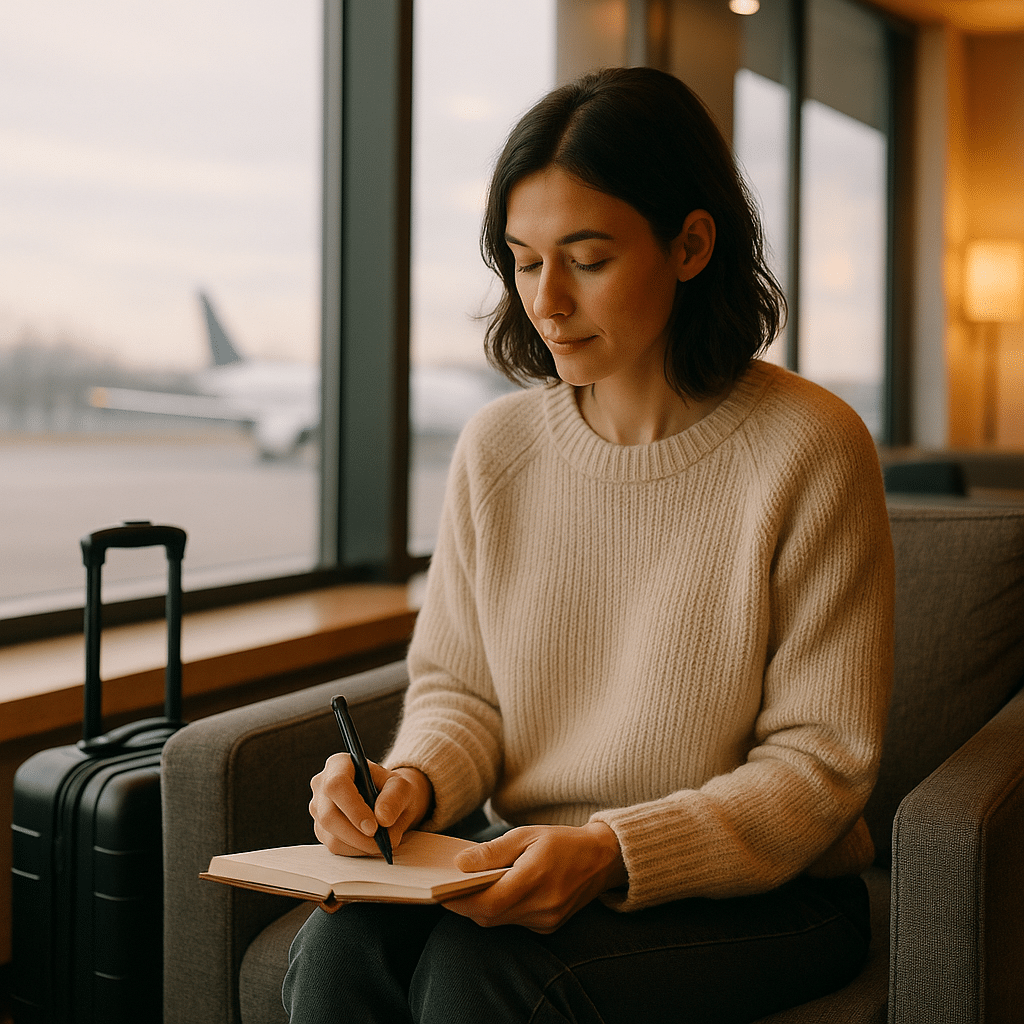
Travel season should feel exciting, but many people notice their anxiety symptoms rise the moment they start planning a trip. Some shrug it off as “holiday stress,” yet the science shows something deeper happening.
A large share of Americans already live with anxiety disorders; NIMH notes that roughly one-third of adults and adolescents experience one at some point, so travel lands on top of an already strained system. When routines shift, crowds grow, and expectations stack up, the body reacts quickly. Understanding these patterns helps people prepare in ways that feel supportive rather than harsh or self-critical.
Quick Answer Summary
Travel season can intensify anxiety because it disrupts routines, increases stress, and adds triggers like crowds, delays, and social pressure. For people already managing anxiety, these changes can heighten symptoms quickly, making preparation, structured coping strategies, and professional support important for maintaining stability.
Why a High-Stress Travel Season Hits an Already Anxious Population
Anxiety is incredibly common, and many people move through daily life without formal help. The Anxiety and Depression Association of America (ADAA) estimates that over 6 million adults live with generalized anxiety, nearly 15 million experience social anxiety, and close to 20 million manage specific phobias. Only a portion receive care, which means many enter November and December already carrying tension they’ve been holding for months.
This becomes clearer when you consider how intense the season feels for workers. A CDC-supported review found that close to half (47%) of retail workers reported higher stress during the holidays. Their stress stems from long hours, constant crowds, and a noticeable loss of control, three conditions travelers also face. It’s not surprising that people with untreated or under-managed anxiety feel overwhelmed before they even get to the airport.
How Holiday Travel Triggers the Body’s Stress Response
Travel puts the body under real pressure, even when the plan goes smoothly. Jet lag, shaky sleep, and scattered meals can nudge your mood in the wrong direction. The CDC notes that these shifts make people more sensitive to stress. When you are tired, your brain reacts faster to noise, delays, and the small surprises that come with moving from place to place.
Fear of flying adds another layer. About 25 million adults in the U.S. struggle with flight-related anxiety. Some fear heights, others fear the lack of control, and others worry about having a panic attack on board. Whatever the cause, holiday travel increases exposure to these triggers. More flights, more delays, more noise. Every part of the experience can make emotional pain worse.
Crowds, Unfamiliar Environments, and Social Pressure Intensify Emotional Strain
Once people begin their trip, another set of challenges emerges: crowds, unfamiliar settings, and social obligations. Unfamiliar environments, especially when language, layout, or routines differ, can heighten anxiety for people who already live with panic disorder, social anxiety, or agoraphobia. Something as simple as navigating a new airport or figuring out local transportation can spike tension.
Then there’s the emotional weight of the season. Family expectations, financial pressure, and the subtle feeling that you’re supposed to “be cheerful” can collide with everything happening physically.
In an earlier APA survey, many adults described the holidays as stressful for reasons that had little to do with the travel itself. People worry about interactions with relatives, about money, about performing socially in ways they don’t have energy for. They carry that stress into the airport.
When these forces stack up, such as exhaustion, crowds, uncertainty, and emotional expectations, it makes sense that anxiety symptoms intensify. Understanding this combination can help people feel less confused by their reactions. It’s not weakness, though. It’s a predictable response to a very layered environment.
Who Is Most Affected During Travel Season
Certain groups are especially vulnerable during busy travel periods. Teens and young adults fall into this category.
ADAA’s summary of national data shows that about 31.9% of adolescents live with an anxiety disorder. For them, travel disrupts social rhythms, sleep patterns, and familiar settings, all at once. A teen who feels steady at home may struggle during a long layover or crowded family gathering.
Workers heading into holiday rush periods also feel the impact. Chronic workplace stress raises the risk of anxiety disorders and burnout. When someone pushes through weeks of demanding shifts, their body has little reserve left for complicated travel. Anxiety tends to flare most when internal resources are stretched thin.
People with phobia-related anxiety, especially fear of flying or enclosed spaces, often struggle the most. The travel season increases the number of triggering situations they must move through. Even someone who manages well most of the year may feel overwhelmed between Thanksgiving and New Year’s.
How Evidence-Based Anxiety Treatment Helps People Travel With More Stability
Support makes a real difference, especially when it’s structured and grounded in evidence. A recent meta-analysis followed thousands of adults receiving CBT for generalized anxiety. Across more than 50 trials, individual CBT consistently outperformed standard care and waitlist groups. Remote CBT helped some people, but face-to-face support remained the strongest option. This tells us something important: Practicing coping skills works best when guided by a trained professional who can adjust the plan in real time.
Therapy is only one layer of help. Anxiety disorders are highly treatable using a mix of therapy, medication management, and specialized approaches such as exposure-based strategies for phobias. People often discover that a few targeted sessions before a big trip reduce the intensity of their symptoms more than they expected.
The CDC also recommends pre-travel planning for individuals with mental health conditions. This may involve reviewing medication schedules, building coping routines, and preparing for sleep disruptions. It’s a practical approach that treats mental health care like any other important trip preparation, which supports stability rather than reacting to crisis.
This is where a psychiatrist near you or a therapist with anxiety expertise can help. When someone meets with a clinician in advance, they can practice grounding skills, adjust medications if needed, and talk through scenarios that usually trigger worry. That steady support often becomes the best treatment for anxiety during the chaotic travel season.
When Seasonal Anxiety Feels Overwhelming, Support Is a Call Away
People often don’t see how much stress holiday travel puts on them. The crowds, the sleep changes, the conversations you’re not ready for. Each piece can heighten emotional strain. Recognizing your triggers creates space to plan with more compassion and fewer surprises. But you don’t have to power through it alone.
At Zeam Health & Wellness, we help people prepare for these moments through therapy, medication support, and anxiety-focused planning. If you want structured guidance before your next trip or need help understanding your anxiety symptoms, we can walk with you. Reach out to explore anxiety treatment or connect with a psychiatrist who understands what you’re facing.
Key Takeaways
- Anxiety is extremely common before travel season, with NIMH noting that about one-third of adults and adolescents will experience an anxiety disorder at some point. Crowds, schedule disruptions, and holiday pressure intensify symptoms for people already living with chronic anxiety.
- Holiday and workplace stress amplify symptoms, especially for individuals already stretched thin. APA survey data shows widespread holiday stress, while CDC-supported findings reveal elevated stress in high-demand work environments—conditions travelers also face.
- Travel disrupts sleep, appetite, and circadian rhythms, all of which increase emotional sensitivity and stress reactivity. These physical changes make travelers more prone to overwhelm, irritability, and panic spikes.
- Fear of flying affects roughly 25 million adults, and holiday travel directly increases exposure to flight-related triggers. Crowding, noise, turbulence, and lack of control are common contributors.
- Teens, young adults, and individuals with specific phobias or workplace burnout are especially vulnerable to anxiety during travel season because travel magnifies the stressors they already face.
- Evidence-based treatments—especially CBT—significantly improve anxiety symptoms, with large meta-analyses showing stronger outcomes than waitlist or standard care, particularly when therapy is delivered face-to-face.
- Preparing with a clinician reduces travel-related anxiety, including practicing grounding skills, reviewing medication timing, adjusting sleep routines, and planning for triggers in advance.
Citations
- National Institute of Mental Health – Anxiety Disorders
https://www.nimh.nih.gov/health/topics/anxiety-disorders - Anxiety & Depression Association of America – Facts & Statistics
https://adaa.org/understanding-anxiety/facts-statistics - American Psychiatric Association – Holiday Stress Report
https://www.psychiatry.org/File%20Library/Unassigned/APA_Holiday-Stress_PPT-REPORT_November-2021_update.pdf - Cleveland Clinic – Aerophobia (Fear of Flying)
https://my.clevelandclinic.org/health/diseases/22431-aerophobia-fear-of-flying - Anxiety & Depression Association of America – Facts & Statistics (duplicate cited as needed)
https://adaa.org/understanding-anxiety/facts-statistics - Systematic Review: CBT Effectiveness for Anxiety (PMC)
https://pmc.ncbi.nlm.nih.gov/articles/PMC12162829/