
How Therapy Helps Patients Navigate Feelings of Guilt that Contribute to Emotional Distress

Guilt is not always a problem. It does a job. When you hurt someone or step outside your own values, guilt flags it, and sometimes that flag is the very thing that pushes you to make things right. The trouble starts when it overstays. Long after the lesson has landed, guilt can keep running quietly […]
How Clinicians Help Patients Identify When Stress Has Become a Chronic Issue
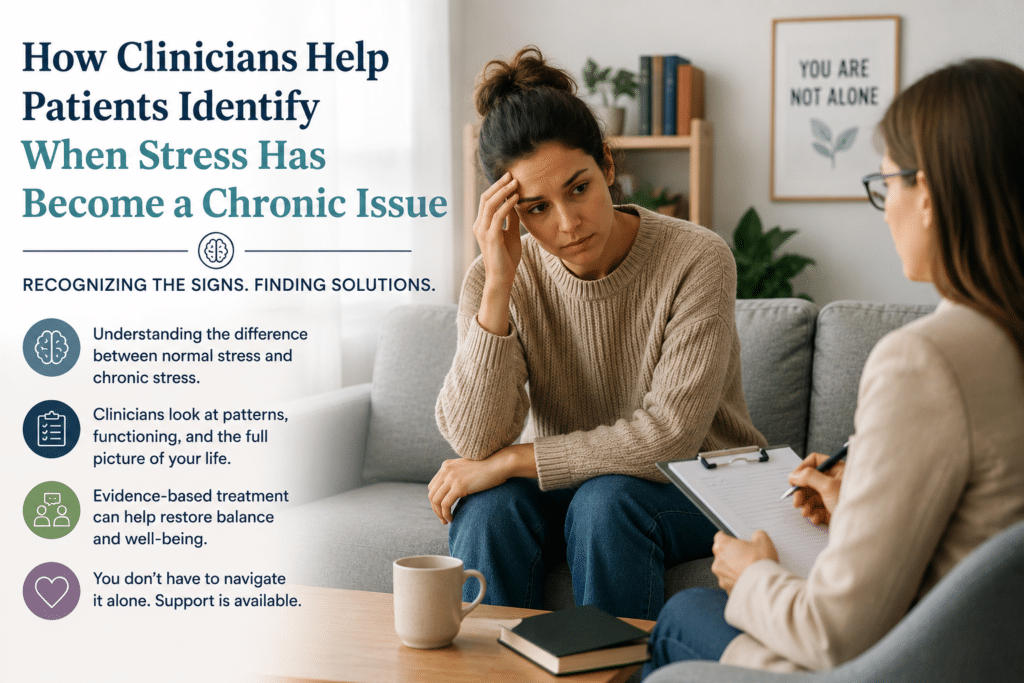
Stress shows up when life asks more of you than usual, and most of the time it fades once the deadline passes or the crisis settles. The trouble starts when it does not fade. A pressure that felt temporary digs in, outlasts the thing that caused it, and quietly reshapes how you sleep, focus, and […]
Why Some Patients Wait Longer Than They Realize to Seek Mental Health Support

Most people do not wake up one morning and decide to put off mental health care. The change usually arrives slowly: Energy dips, sleep gets worse, patience runs thin, and motivation fades, and each shift feels small enough to explain away. Because the signs are so easy to misread, the gap between when symptoms start […]
How Clinicians Help Patients Recognize When Perfectionism Is Contributing to Emotional Distress

Most of us were taught that high standards are a good thing. Working hard, catching mistakes, and caring about quality usually earn praise. But for some people, the drive to get everything right stops feeling motivating and starts feeling like a weight that never lifts. It shows up as chronic worry, harsh self-judgment, and a […]
Why High-Achieving Adults Sometimes Overlook Signs of Anxiety and Depression

Some of the most accomplished people you know are also some of the most quietly exhausted. They run teams, hit targets, raise kids, and answer emails at midnight, all while carrying a weight they rarely name out loud. From the outside, everything looks handled. That outside view is exactly the problem. When you are used […]
Why Some Patients Struggle More Emotionally During Quiet or Unstructured Periods of the Day

A lot of people describe a version of the same experience. Work is fine, errands get done, and social plans go okay. But once the day quiets down, something shifts. Evenings feel heavy, and weekends feel harder than they should. Quiet time is not the problem. What those slower hours do is remove the noise […]
Why Some Patients Struggle More With Evenings, Weekends, or Unstructured Time Emotionally

A lot of people who deal with anxiety or depression notice something confusing: The hardest moments don’t always line up with the hardest circumstances. A full workday passes without much trouble. Then evening comes, the schedule empties out, and something shifts. The same thing happens on weekends, during long holidays, or on any quiet afternoon […]
The Real Signs of Progress in Mental Health Recovery (That Aren’t Always Obvious)

Recovery often unfolds in ways that feel subtle rather than dramatic. The early stages rarely deliver a single moment when everything clicks back into place. Instead, change tends to appear in small shifts that can be hard to notice when you are focused on your progress in depression treatment. This blog explores why these early […]
5 Surprising Benefits of Hormone Replacement Therapy for Women Over 40

Most women expect hot flashes, night sweats, and irregular cycles as they approach their forties. What many do not expect are the slower, quieter changes: waking up tired despite eight hours of sleep, forgetting familiar words mid-sentence, or suddenly feeling like a stranger in their own skin. These are just as real as the classic […]