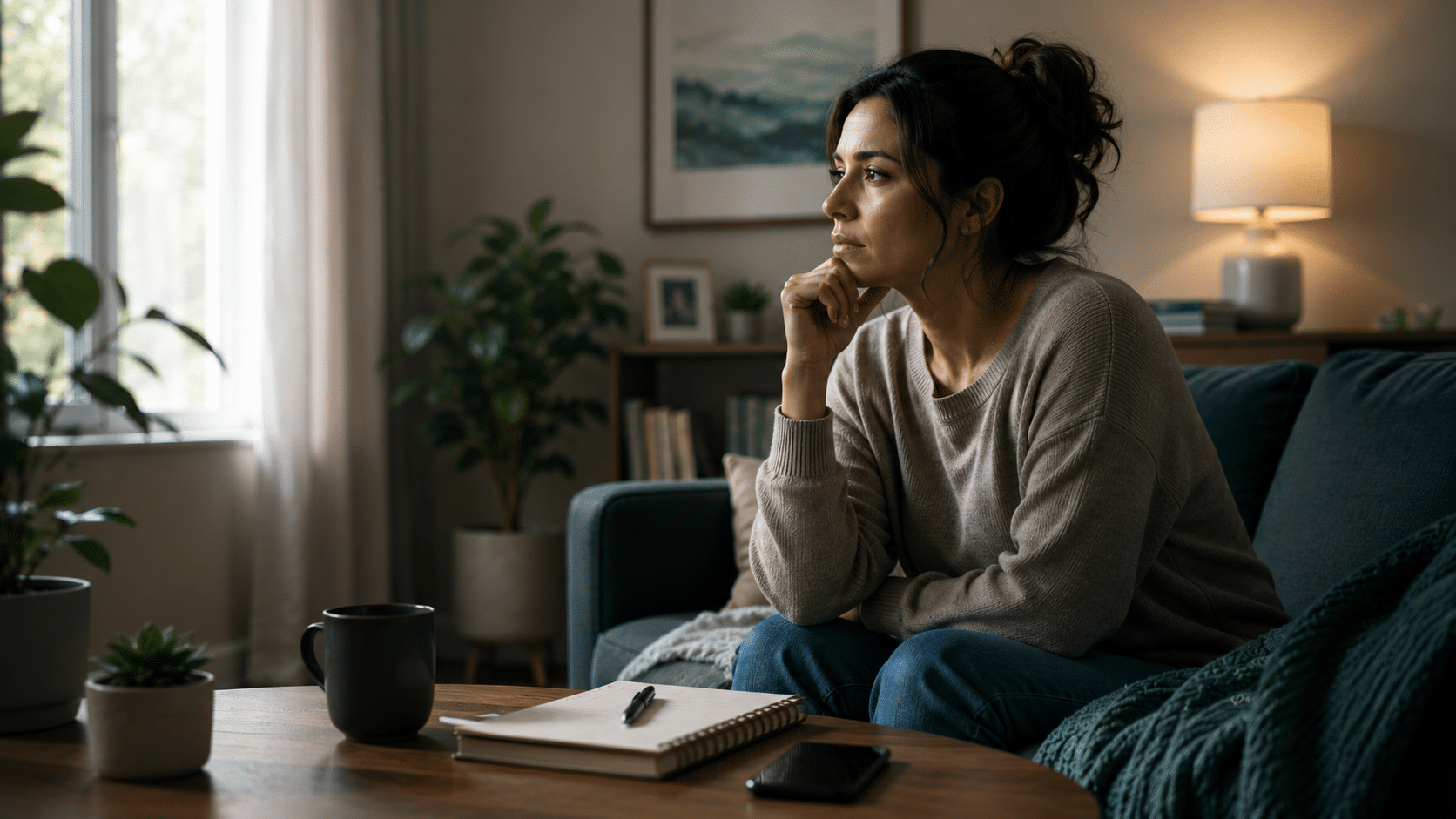
You leave your appointment with a good idea, maybe a grounding exercise or a new way to check a worried thought. Then Tuesday happens. Work piles up, the exercise slips your mind, and by the time anxiety spikes again, you can’t remember what you meant to do.
That gap between learning a skill and reaching for it is normal, and it’s exactly what anxiety treatment at home is meant to close. Used well, it doesn’t replace your care team. It means having a go-to skill ready, knowing what to do with the thought behind the anxiety, keeping a few notes worth bringing back, and knowing when to loop your provider in early.
Quick Answer Summary
Anxiety treatment at home helps reinforce the skills you learn in therapy by giving you practical techniques to use between appointments. Strategies such as grounding exercises, structured breathing, cognitive behavioral therapy (CBT) techniques, healthy routines, and tracking your symptoms can reduce anxiety and help you recognize important patterns. Home strategies are most effective when they complement professional mental health care rather than replace it.
Key Takeaways
- Anxiety treatment at home supports—not replaces—professional therapy and medication management for anxiety disorders.¹˒⁶
- Grounding exercises, structured breathing, and CBT-based thought reframing can help reduce anxiety between appointments.²˒³
- Consistent routines, regular physical activity, and limiting excessive caffeine may help improve overall anxiety management.⁴˒⁷
- Keeping a simple record of triggers, coping strategies, and symptom patterns provides valuable information for future therapy sessions.⁵
- Worsening symptoms, medication concerns, or severe distress should always be discussed with your mental health provider rather than managed alone.¹˒⁶˒⁷
What At-Home Anxiety Treatment Can (and Can’t) Do
At home, you can practice skills your therapist introduced, keep your daily routine a little steadier, and start noticing what makes symptoms better or worse. That information becomes useful the next time you sit down with your provider. What home practice can’t do is diagnose anything, replace psychotherapy or medication management, or safely change a treatment plan on its own.
An anxiety disorder is different from the stress everyone feels sometimes. According to the National Institute of Mental Health, it tends to stick around, show up in more situations over time, and interfere with sleep, work, or relationships. That’s a clinical picture, and clinical pictures need a clinician. Home tools work alongside that care, not instead of it.
Build on the Plan You Already Have
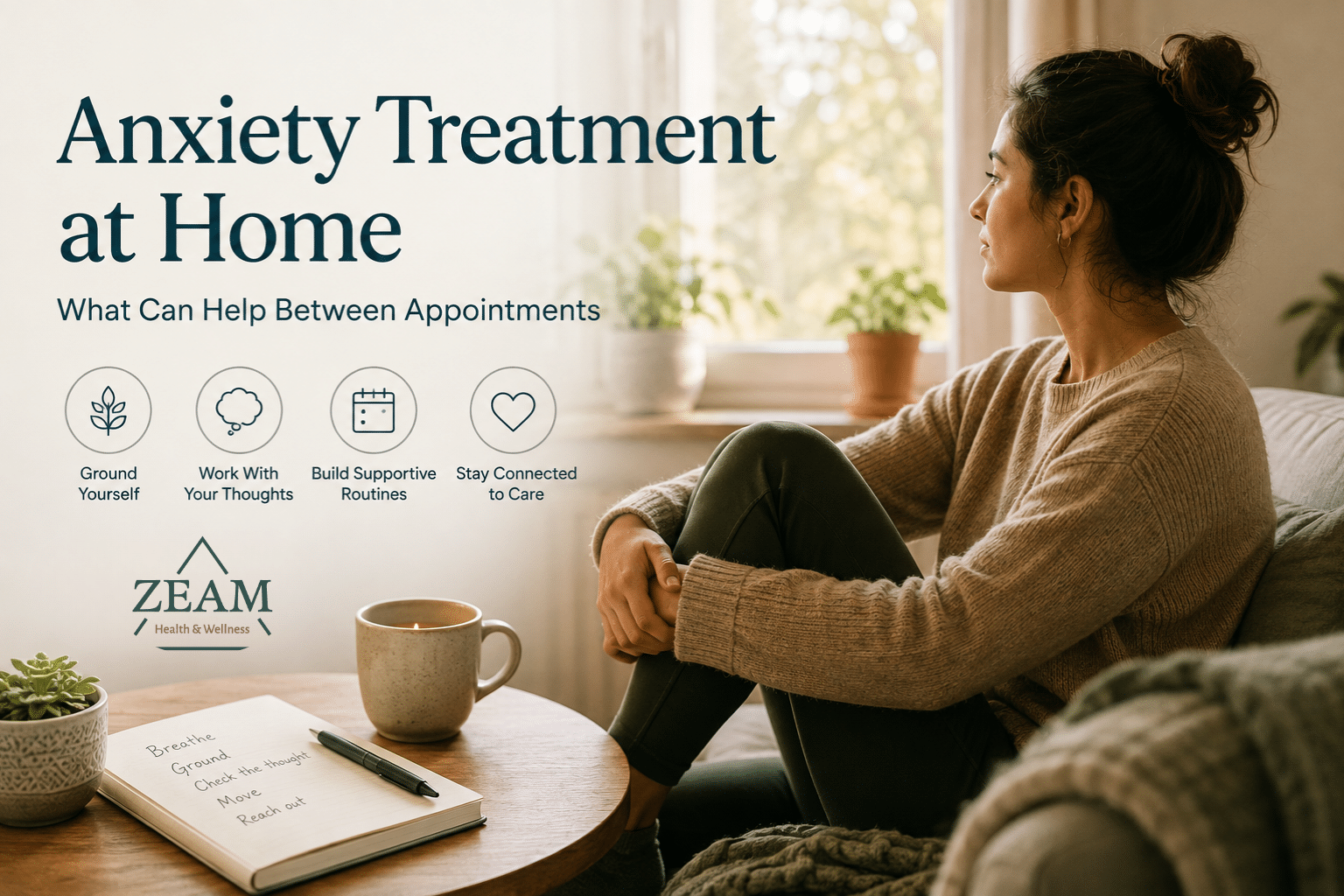
Choose a single skill for the moment anxiety starts to rise and one small routine that supports the rest of your day. Attach each one to a specific cue, like right after you wake up or the second you notice your shoulders tightening. If your therapy includes assigned practice between visits, treat it as part of treatment rather than an optional extra.
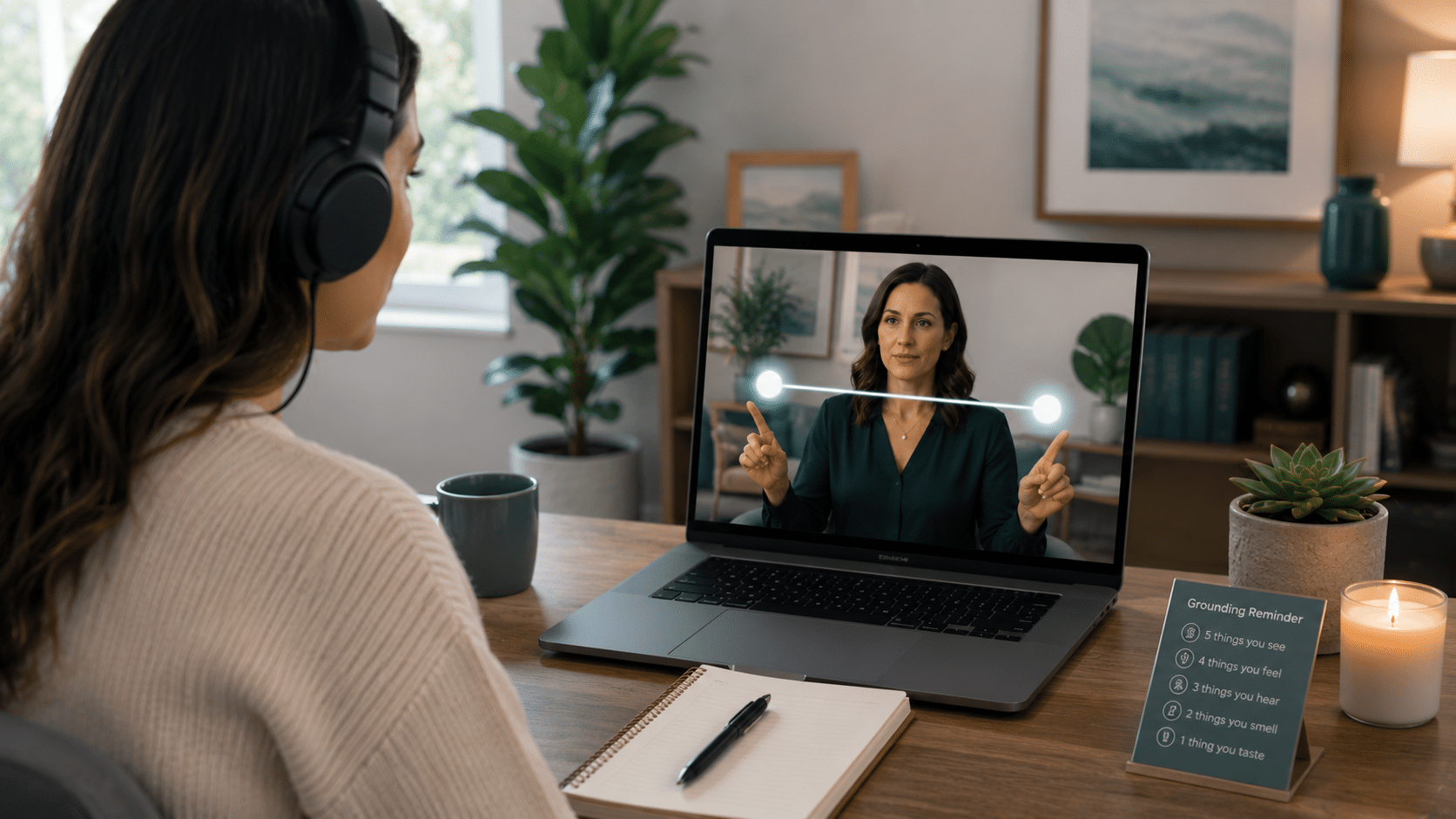
Grounding is one option worth having ready. It works by shifting your attention away from distressing thoughts and toward your immediate surroundings, whether that’s naming what you see and hear or pressing your feet into the floor.
Slow, unhurried breathing also helps. A 2023 Stanford-led study found a few minutes of structured breathing daily improved mood more than the same amount of meditation over a month. However, it tested everyday stress rather than diagnosed anxiety.
Neither tool needs to be perfect. If one doesn’t fit your life, that’s useful feedback for your next appointment, not a personal failure.
Work With the Thought, Not Against Yourself
Managing anxiety symptoms day to day isn’t about forcing positivity. It’s about slowing down enough to see the thought clearly.
Try asking yourself a few questions when anxiety spikes:
- What just happened?
- What am I predicting will go wrong?
- What supports that, and what doesn’t?
- Is there a more balanced way to see this?
This mirrors the thought-pattern work used in cognitive behavioral therapy (CBT), one of the better-studied approaches for generalized anxiety. Be careful not to turn this into constant checking or reassurance-seeking, since that can end up feeding anxiety rather than easing it.
A steady routine makes this thinking easier to access in the first place. Keeping a consistent wake time, a short list of morning priorities, and a real transition out of work before bed gives your day some predictable shape. The CDC notes that regular movement can lower anxiety risk over time, and any amount helps, so this isn’t about training for a marathon.
Watching caffeine also matters, since it can mimic restlessness and a racing heart. Mindfulness can help some people notice a thought without obeying it, but it isn’t universally calming. If it ever makes things worse, mention that at your next visit rather than pushing through alone.
Keep Notes That Actually Help at the Next Visit
A quick log turns a vague “I’ve been anxious” into something your provider can work with. Jot down what triggered the moment, what you predicted, what you felt physically, and what you did about it, including any avoidance. Note which skill you tried and whether it helped at all, along with context such as sleep or a missed dose.
In a study of adults completing CBT for anxiety and related conditions, the quality of between-session practice was linked to better clinical outcomes. That doesn’t mean notes alone treat an anxiety disorder. It means showing up prepared makes the professional side of anxiety treatment more precise.
One caution: Keep the log light. Scoring yourself constantly or scanning your body for symptoms can backfire, making you more preoccupied rather than less.
Know When It’s Time to Loop in Your Provider
Home practice works best when you know its limits. Some changes are worth flagging before your next scheduled visit rather than waiting.
Reach out sooner if anxiety is becoming more frequent or harder to recover from, if it’s spreading into more parts of your life, or if a coping tool keeps making things worse instead of better. The same goes for medication concerns. If you notice side effects, miss doses, or want to stop, talk to your prescriber first. The NIMH advises against stopping psychiatric medication on your own, even when you’re feeling better, since some medications need time to work and stopping abruptly can cause problems.
The same caution applies to supplements marketed for anxiety. “Natural” doesn’t mean risk-free, and some, like kava, have been linked to serious harm.
New or severe physical symptoms also deserve a conversation, since they shouldn’t automatically be chalked up to anxiety. If you’re in immediate danger, contact emergency services or the 988 Lifeline.
Between Appointments, You’re Still in Treatment
That ordinary Tuesday from the beginning of this article doesn’t have to feel so unmanageable. The small, repeatable choices you make between sessions, from a grounding exercise to a steadier bedtime, are part of what makes your therapy work in real life, not a separate project you’re running on your own.
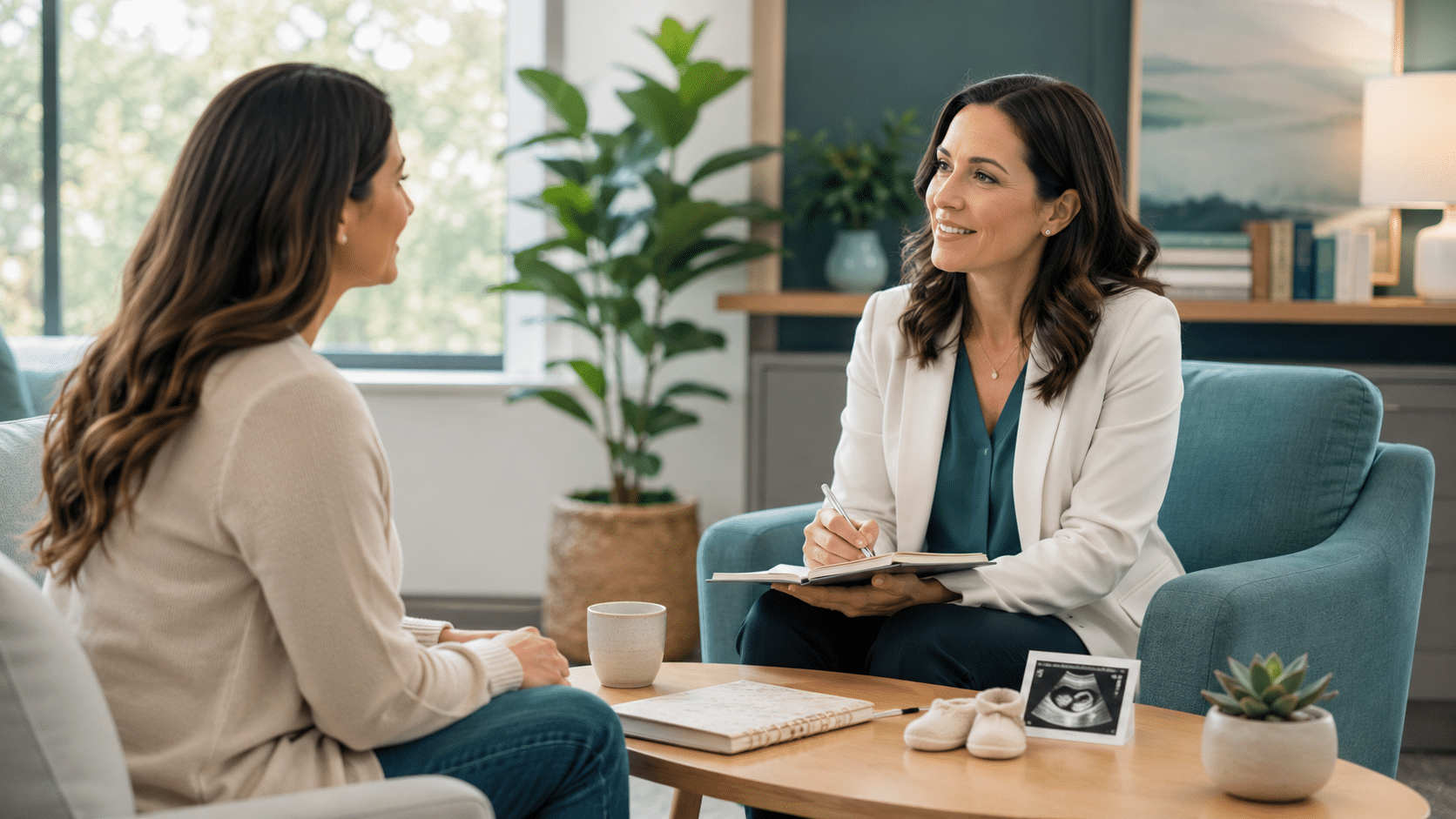
None of this replaces your care team. It gives them better information and gives you a steadier place to stand while the plan does its work. If you’re noticing patterns worth discussing, or if something isn’t fitting the way it should, Zeam would like to help you adjust it together. Reach out to our anxiety care team in Sacramento, Folsom, or Roseville to talk through what’s working and what needs a second look.
Citations
- National Institute of Mental Health (NIMH). Anxiety Disorders.
https://www.nimh.nih.gov/health/topics/anxiety-disorders - U.S. Department of Veterans Affairs (VISN 16 MIRECC). Relaxation Skills for Anxiety.
https://www.mirecc.va.gov/visn16/docs/franklin_relaxation_patient_manual.pdf - Balban MY, et al. Brief structured respiration practices enhance mood and reduce physiological arousal. Cell Reports Medicine. 2023.
https://pmc.ncbi.nlm.nih.gov/articles/PMC9873947/ - Centers for Disease Control and Prevention (CDC). Benefits of Physical Activity.
https://www.cdc.gov/physical-activity-basics/benefits/index.html - Kazantzis N, et al. Homework in Cognitive Behavioral Therapy: A Systematic Review. Behaviour Research and Therapy.
https://www.sciencedirect.com/science/article/abs/pii/S0005789421000010 - National Institute of Mental Health (NIMH). Mental Health Medications.
https://www.nimh.nih.gov/health/topics/mental-health-medications - National Center for Complementary and Integrative Health (NCCIH). Anxiety and Complementary Health Approaches.
https://www.nccih.nih.gov/health/anxiety-and-complementary-health-approaches