Keeping a therapy appointment during a hard week sounds simple enough until you are in one. The car needs gas, the babysitter canceled, you barely slept, and the idea of sitting in a waiting room feels like one thing too many.
For people managing ongoing mental health conditions, that kind of week is not unusual. It is when support matters most, but when care is most likely to slip.
Online therapy was not designed as a convenience feature. The more practical role it plays is helping patients stay connected to treatment during the stretches when staying connected is genuinely hard. That is a different thing, and it matters.
Quick Answer Summary
Online therapy helps maintain continuity of care during stressful periods by removing barriers that often lead patients to miss appointments, including transportation issues, childcare conflicts, low energy, and emotional overwhelm. Research shows teletherapy can be as effective as in-person care for many mental health conditions, while allowing patients to continue therapy, medication management, and psychiatric treatment from home. For many people, online counseling provides a practical way to stay connected to care when consistency matters most.
Key Takeaways
- Online therapy helps patients maintain continuity of care during stressful or unstable periods by reducing barriers that often lead to missed appointments¹
- Nearly half of adults with serious mental illness received mental health treatment through teletherapy in 2024, showing how mainstream remote care has become²
- Telebehavioral health includes more than therapy sessions and can also support psychiatric evaluations, medication management, symptom monitoring, and crisis check-ins³
- Research comparing teletherapy with in-person care found similar treatment outcomes and comparable patient retention across many mental health conditions⁴
- Telehealth has become a long-term part of psychiatric treatment, with teletherapy still accounting for nearly 43% of outpatient mental health claims after the pandemic⁵
- Online counseling may reduce stigma and make it easier for patients experiencing depression, anxiety, PTSD, or burnout to continue treatment consistently⁶
What Continuity of Care Means and Why It Matters
Continuity of care is not about attending every single session without fail. It refers to the sustained pattern of treatment that allows progress to accumulate over time.
Therapy is not a single intervention. It works through repetition: returning to the same coping strategies, adjusting what is not working, and building enough of a relationship with a provider to be honest when things are getting worse.
Medication management works the same way. Skipping a follow-up during a rough month is not neutral, as it can mean missing the window where a small adjustment would have helped.
A CDC National Health Interview Survey analysis found that the share of U.S. adults receiving any mental health treatment in the past year rose from 19.2% in 2019 to 23.9% in 2023. More adults are relying on ongoing care now. When it gets disrupted, they lose the progress they spent months building, and they often lose it at exactly the wrong time.
How Online Therapy Removes Logistical and Emotional Barriers
Online therapy does not just make appointments easier to schedule. It addresses the specific combination of obstacles that tend to cause care to fall apart when life is already unstable.
For a lot of patients, a canceled appointment traces back to one of two things: no ride or no one to watch the kids. Online counseling cuts both problems out. The SAMHSA National Survey on Drug Use and Health found that 48.3% of adults with serious mental illness received mental health treatment via teletherapy in 2024. Nearly half of the highest-need group is choosing remote access. That is not an edge case anymore.
Logistical Barriers
Getting to an in-person appointment takes more than just showing up. It means arranging transportation, taking time off work, figuring out childcare, and then doing all of it again for the return trip. When someone is already stretched thin, each of those steps carries more weight than it normally would.
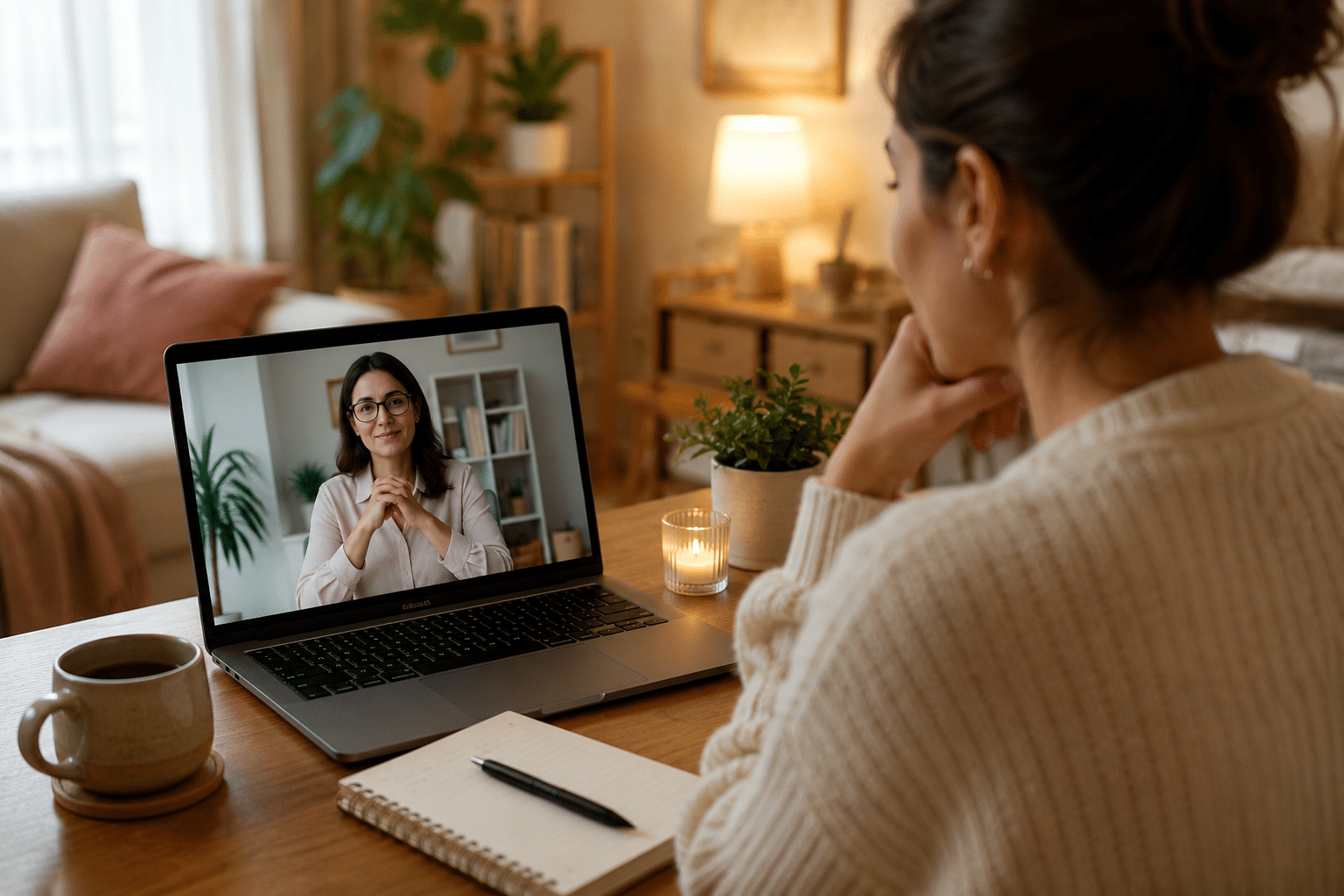
Online counseling removes the commute from the equation entirely. A parent who cannot be away from home for two-plus hours can still attend a 50-minute session without leaving. That small shift keeps a lot of appointments from becoming cancellations.
Emotional and Motivational Barriers
This part gets less attention, but it might be the more important one. Low energy, avoidance, and shutting down are symptoms of the very conditions therapy treats. Asking someone in a depressive episode to get dressed, drive to a clinic, and sit in a waiting room is asking a lot. Some people can do it. Others cannot, not that day.
Remote access gives those patients a lower-friction entry point, which can be enough to keep care from going dark during a bad stretch. Teletherapy may reduce the stigma barrier, since patients can connect without being seen in a clinical setting.
How Psychiatric Treatment Adapts to Online Delivery
It is worth being clear about how much of a treatment plan can travel online, because it goes well beyond a weekly talk session.
According to the HHS research recap, telebehavioral health covers psychiatric evaluations, medication management, symptom monitoring, crisis check-ins, and group sessions, not just individual psychiatric treatment. For patients going through an unstable stretch, that range covers most of what they need. Medication adjustments require follow-up. Relapse prevention depends on regular contact.
Remote check-ins let providers catch symptom shifts early. That matters more during a difficult month than almost anything else psychiatric treatment can offer.
Telehealth supports mental health care continuity for underserved patients and helps with care coordination during and after public health emergencies. A survey of treatment facilities found 80% now offer care via telehealth, so access has expanded considerably.
What Makes Online Therapy Effective for Ongoing Care
Some patients reasonably wonder whether remote sessions produce real outcomes or just feel convenient. The research gives a careful but useful answer.
A VA Evidence Synthesis Program review looked at 50 studies comparing telehealth and in-person delivery for the same mental health interventions. Most studies found online therapy to be comparable to in-person care. Dropout rates did not consistently differ between the two formats either, which is relevant for anyone worried that remote sessions lead to patients drifting away. The review was honest that evidence quality varied across the studies, and that finding should not be smoothed over.
Remote care is not the right fit for every patient. Someone with acute safety concerns, limited privacy at home, or a more complex medication situation may still need in-person support for some of their care.
After pandemic restrictions lifted, patients did not revert to in-person care the way many expected. A JAMA Network Open analysis found teletherapy still accounted for 42.9% of outpatient mental health claims, across depression, anxiety, PTSD, and bipolar disorder. People kept showing up remotely when they had a choice. That is hard to explain as anything other than online counseling working for them.
Keep Moving Forward, Even When Life Gets Messy
The core case for online therapy during stressful periods is not complicated. It lowers the barriers that tend to break care down when patients are already struggling, and it keeps treatment active during the exact stretches when going dark is most costly.
At Zeam, we offer teletherapy and telepsychiatry built around that reality. If schedule pressure, distance, or a hard season has made it difficult to stay consistent with therapy or psychiatric treatment, our team can help you build a care plan that holds even when everything else feels uncertain. Contact us today to get started.
Citations
- CDC – Mental Health Treatment Trends in U.S. Adults
https://www.cdc.gov/mmwr/volumes/73/wr/mm7350a5.htm - SAMHSA 2024 National Survey on Drug Use and Health
https://www.samhsa.gov/data/sites/default/files/reports/rpt56287/2024-nsduh-annual-national-report.pdf - U.S. Department of Health & Human Services – Telehealth and Behavioral Health Research Recap
https://telehealth.hhs.gov/documents/ResearchRecap-Telehealth_and_Behavioral_Health_09-30-24.pdf - VA Evidence Synthesis Program Review on Telehealth vs In-Person Mental Health Care
https://pubmed.ncbi.nlm.nih.gov/38306092/ - JAMA Network Open – Trends in Teletherapy Use After the Pandemic
https://www.ncbi.nlm.nih.gov/books/NBK586283/ - Teletherapy and Continuity of Mental Health Care Research
https://pmc.ncbi.nlm.nih.gov/articles/PMC12771218/